Governance, Accountability And Representation: Odisha Debates Mahakalapada Episode
By Sunil Jena
Editor-in-Chief, The Politics Odia
Bhubaneswar/Kendrapara: The arrest of Tikhiri Panchayat Sarpanch Chameli Ojha from Mahakalapada block in Kendrapara district has become one of the most discussed political developments in Odisha. The incident has triggered widespread debate on democratic rights, administrative accountability and the relationship between elected representatives and government officials.
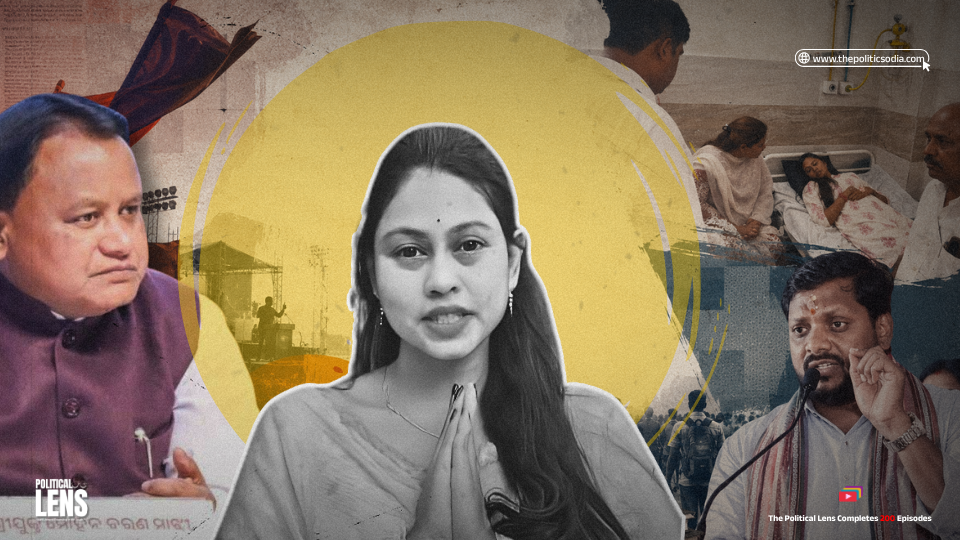
Chameli Ojha, who has been vocal on local governance issues and alleged irregularities affecting her panchayat, was taken into custody by police following a dispute linked to events at the Mahakalapada Block office. The development has generated strong reactions from various sections of society, particularly because Ojha is an elected woman representative.
The incident occurred at a time when the state government was highlighting its achievements during its two-year tenure. As news of the arrest spread, discussions intensified regarding the role of grassroots representatives in raising public concerns and the extent to which elected local leaders can challenge administrative decisions.
The controversy has also brought attention to the broader issue of coordination between elected representatives and government officials. Political observers note that effective governance requires cooperation and dialogue between both institutions, especially when public grievances are involved.

Questions have also been raised regarding the circumstances that led to the confrontation and the subsequent police action. The use of video recording during official interactions has emerged as another point of discussion, with some arguing that transparency mechanisms are increasingly becoming part of public accountability.
The matter gained further attention after reports emerged that Chameli Ojha’s health deteriorated following the police action, leading to medical intervention. These developments have prompted demands for a fair and transparent examination of the entire episode.
The incident has additionally reignited conversations about women’s participation in public life and the challenges faced by female representatives in grassroots governance. Supporters argue that elected women leaders should be able to raise issues affecting their constituencies without fear, while others stress the importance of maintaining institutional decorum during official engagements.
According to recent reports, Chameli Ojha was produced before a court following her arrest, ensuring that the matter has now moved into the legal domain. The outcome of legal proceedings and any administrative review will likely shape future political discussions around the case.
As public debate continues, the Mahakalapada episode has evolved from a local dispute into a larger conversation about democratic institutions, accountability and citizen representation in Odisha.
The Political Lens By Sunil Jena
The Mahakalapada episode highlights the delicate balance between administrative authority and democratic representation. Incidents involving elected local representatives often carry implications beyond individual disputes, influencing public trust in governance, institutional transparency and the perception of accountability within the democratic system.
Author Profile

- Sunil Jena is the Editor of The Politics Odia, an independent digital platform that delivers fearless political analysis, ground reports, and investigative stories from Odisha. Known for bold storytelling and grassroots connections, Sunil is shaping a new era of regional journalism.
Latest entries
 AnalysisSeptember 17, 2026Dilu’s Game, Mohan’s Trouble? 30 Munda Tribals Allegedly Missing, 100+ Acres of Tribal Land Under Question, PM Modi Must Take Note : Super Exclusive
 AnalysisSeptember 11, 2026Thank You, Naveen Babu? BJD’s MMDR Protest Raises Questions Over Leadership and Political Strategy
 AnalysisSeptember 9, 2026CM in Dubai, Mining Mafia in Keonjhar? Who Is Protecting Odisha’s Mineral Wealth?
 AnalysisSeptember 7, 2026Why Is Mineral-Rich Odisha Still Poor? Radhakanta Sethi Takes on the MMDR Bill in Debate with Sunil Jena