By Sunil Jena
Editor-in-Chief, The Politics Odia
Bhubaneswar/Kendrapara: The political debate surrounding Mahakalapada Sarpanch Chameli Ojha continues to expand beyond administrative and legal questions, with attention now turning toward the silence of veteran Odisha politician Bijoy Mohapatra.
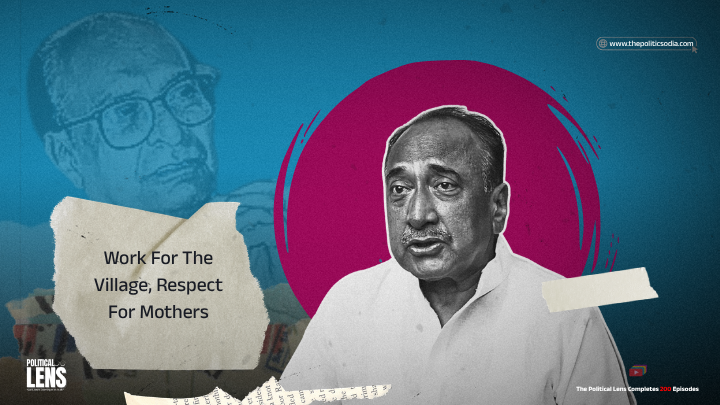
For decades, Bijoy Mohapatra has been regarded as one of the prominent political figures associated with the ideological legacy of former Chief Minister Biju Patnaik. His speeches and public interventions have frequently highlighted Biju Patnaik’s vision of grassroots governance, women’s empowerment and decentralization of power through Panchayati Raj institutions.
The Chameli Ojha episode has now prompted sections of the political community to ask whether senior leaders associated with that legacy should publicly comment on issues involving elected women representatives.
Biju Patnaik’s political philosophy was often summarized through the slogan “Gaanku Kaam, Maaku Samman” (Work For The Village, Respect For Mothers). His government played a significant role in expanding women’s participation in local self-governance, laying the foundation for greater representation of women in Panchayati Raj institutions across Odisha.

Against that backdrop, the recent developments involving Chameli Ojha have generated widespread discussion. Supporters of the Mahakalapada Sarpanch argue that the issue goes beyond one individual and touches upon larger questions of local governance, public representation and the role of women leaders in grassroots politics.
Political observers note that Mahakalapada shares geographic and political proximity with areas where Bijoy Mohapatra has traditionally exercised influence. Consequently, his decision not to make any public statement on the matter has become a subject of political discussion.
While some believe senior leaders are not obligated to comment on every ongoing controversy, others argue that issues involving elected women representatives naturally invite scrutiny from leaders who have historically advocated Panchayati Raj empowerment.
The debate has also reopened conversations about the broader state of local governance in Odisha and the relationship between elected representatives and administrative institutions.
At present, neither Bijoy Mohapatra nor his office has issued any detailed public reaction regarding the Chameli Ojha matter. However, the political conversation surrounding his silence continues to gain traction in Odisha’s political circles.
Whether the discussion remains limited to political commentary or evolves into a broader debate about democratic representation and women’s participation in governance remains to be seen.
The Political Lens By Sunil Jena
Political legacies are often measured not only by historical achievements but also by how contemporary issues are interpreted through those ideals. Debates surrounding local governance, women’s representation and administrative accountability can influence public perception far beyond a single incident, particularly when they involve symbolic political narratives.
Author Profile

- Sunil Jena is the Editor of The Politics Odia, an independent digital platform that delivers fearless political analysis, ground reports, and investigative stories from Odisha. Known for bold storytelling and grassroots connections, Sunil is shaping a new era of regional journalism.
Latest entries
 AnalysisSeptember 17, 2026Dilu’s Game, Mohan’s Trouble? 30 Munda Tribals Allegedly Missing, 100+ Acres of Tribal Land Under Question, PM Modi Must Take Note : Super Exclusive
 AnalysisSeptember 11, 2026Thank You, Naveen Babu? BJD’s MMDR Protest Raises Questions Over Leadership and Political Strategy
 AnalysisSeptember 9, 2026CM in Dubai, Mining Mafia in Keonjhar? Who Is Protecting Odisha’s Mineral Wealth?
 AnalysisSeptember 7, 2026Why Is Mineral-Rich Odisha Still Poor? Radhakanta Sethi Takes on the MMDR Bill in Debate with Sunil Jena