Sunil Jena
Editor-in-Chief, The Politics Odia
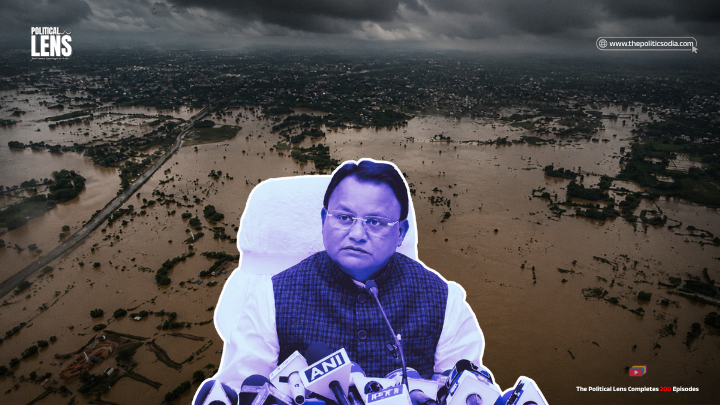
Bhubaneswar : Odisha continues to struggle with one of the season’s most serious flood situations. Heavy rainfall, overflowing rivers and waterlogged villages have affected lakhs of people across several districts. While thousands of families remain stranded, concerns are growing over relief, rehabilitation and the long-term impact on agriculture.
For many flood-affected families, the biggest challenge is not just the rising water but the uncertainty of when normal life will return.
Large areas in Kendrapara, Khordha, Subarnapur and Nabarangpur have reported extensive crop damage. In several villages, floodwater has still not receded, while in others agricultural fields are buried under layers of silt and sand. Farmers say months of hard work have been washed away within a few days.
In Mahakalapada block of Kendrapara district, vast stretches of farmland remain submerged. Many farmers fear they may not be able to cultivate again this season unless water recedes quickly.

Chief Minister Mohan Charan Majhi returned to Odisha after completing his visit to New Delhi and conducted an aerial review of the flood-affected areas. Addressing the media, he said the state government is closely monitoring the situation and that the Centre has extended financial support for relief and rehabilitation.
The Union Government has approved ₹500 crore as financial assistance for Odisha under disaster relief provisions. The assistance comes as part of advance allocations released for seven flood-affected states. According to official information, Odisha is among the states receiving support to strengthen ongoing rescue, relief and restoration efforts.
The Chief Minister also stated that district administrations have been instructed to ensure food, drinking water, medical care and other essential services reach affected people as quickly as possible.
Despite these assurances, criticism from the opposition has continued.
Several opposition leaders have alleged that relief materials are not reaching many flood-hit villages in time. They claim that people in several affected areas are still waiting for food, drinking water and basic necessities. These allegations have become a major political issue during the ongoing flood crisis.
Another controversy erupted after a public exchange involving former Odisha Assembly Speaker and senior BJD leader Pramila Mallik and BJP MP Rabindra Behera.
The dispute began after Pramila Mallik questioned the preparedness of the administration in handling the flood situation. Her remarks drew sharp criticism from the BJP, with party workers staging protests and burning her effigy in some places.
The development has triggered fresh political debate because, in Odisha, effigy-burning protests are generally organised by opposition parties against governments. This time, the ruling party’s workers protested against an opposition leader, making the incident politically significant.
The exchange also brought attention to remarks attributed to MP Rabindra Behera, who reportedly said he came to know about the flood situation through social media and news reports while travelling outside the state. His statement has been criticised by opposition leaders, who argue that elected representatives should remain directly connected with developments in their constituencies during emergencies.
Meanwhile, the flood situation continues to evolve.
Officials are monitoring river levels, while relief teams remain engaged in rescue operations in vulnerable areas. The government has appealed to citizens to avoid rumours and follow official advisories as rainfall continues in several river catchments.
For farmers, however, the immediate concern is rebuilding their livelihoods. Standing paddy crops have been destroyed in many places, nurseries have been damaged and uncertainty remains over compensation and future cultivation.
As Odisha battles the immediate humanitarian challenge, the political debate over preparedness, accountability and disaster response is expected to continue in the coming days.
Ultimately, the success of the government’s response will not be measured by political statements but by how quickly relief reaches affected families, damaged infrastructure is restored and farmers receive meaningful support to recover from the losses caused by the floods.
Sunil Jena’s Observation
Floods test both governance and society. Political parties will naturally debate preparedness and accountability, but for people living in relief camps or marooned villages, timely rescue, food, drinking water and rehabilitation matter far more than political arguments. As the waters recede, the focus should shift toward transparent relief distribution, support for farmers and long-term flood resilience.
Author Profile

- Sunil Jena is the Editor of The Politics Odia, an independent digital platform that delivers fearless political analysis, ground reports, and investigative stories from Odisha. Known for bold storytelling and grassroots connections, Sunil is shaping a new era of regional journalism.
Latest entries
 AnalysisSeptember 17, 2026Dilu’s Game, Mohan’s Trouble? 30 Munda Tribals Allegedly Missing, 100+ Acres of Tribal Land Under Question, PM Modi Must Take Note : Super Exclusive
 AnalysisSeptember 11, 2026Thank You, Naveen Babu? BJD’s MMDR Protest Raises Questions Over Leadership and Political Strategy
 AnalysisSeptember 9, 2026CM in Dubai, Mining Mafia in Keonjhar? Who Is Protecting Odisha’s Mineral Wealth?
 AnalysisSeptember 7, 2026Why Is Mineral-Rich Odisha Still Poor? Radhakanta Sethi Takes on the MMDR Bill in Debate with Sunil Jena