Sunil Jena
Editor-in-Chief, The Politics Odia
Bhubaneswar: More than two years after the BJP formed its first government in Odisha, a new debate has emerged over the conduct of elected representatives and their relationship with the administrative and academic establishments. A series of public confrontations involving ministers and MLAs has raised questions about whether these incidents reflect political assertiveness, administrative frustration, or a deeper issue within governance.
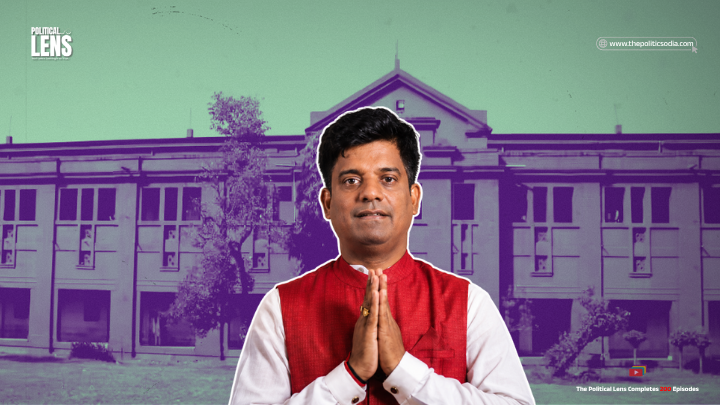
The latest controversy has unfolded at Ravenshaw University in Cuttack, where a disagreement between Cuttack Sadar MLA Prakash Chandra Sethi and members of the Ravenshaw Teachers’ Association has escalated into a larger public dispute.
According to the MLA, he visited the university to understand and address issues raised by students. He has alleged that Chief Warden Sudarshan Mishra engaged in an unnecessary argument during the interaction. Following the incident, the MLA wrote to the Speaker of the Odisha Legislative Assembly, requesting appropriate action against the Chief Warden.
However, the Teachers’ Association has taken a completely different position. The association has demanded that the MLA issue an unconditional public apology, arguing that the dignity and autonomy of the university and its faculty must be respected. Teachers have maintained that academic institutions should function independently and without undue political pressure.

The disagreement has now moved beyond the university campus and entered the broader political discourse. The episode has generated discussions on the limits of political intervention in educational institutions and the manner in which elected representatives should engage with university authorities.
This is not the first such incident to attract attention. In recent weeks, Food Supplies Minister Krushna Chandra Patra’s surprise inspection in Dhenkanal, during which he publicly reprimanded government officials over alleged irregularities in the implementation of the Pradhan Mantri Awas Yojana, also became a subject of intense debate. While supporters viewed the minister’s actions as decisive governance, critics questioned whether public confrontations with officials were the most effective way to ensure accountability.
These incidents have revived a larger question about governance in Odisha. Should elected representatives exercise authority through direct public intervention, or should administrative accountability be pursued through institutional mechanisms? Opinions remain divided.
Supporters of the government argue that ministers and MLAs are elected by the people and therefore have every right to question officials wherever public interest is involved. They believe such interventions demonstrate responsiveness and a willingness to act against inefficiency.
Critics, however, contend that accountability must be accompanied by institutional dignity. They argue that repeated public confrontations with bureaucrats or academic authorities may weaken administrative morale and create unnecessary friction between constitutional institutions.
The Ravenshaw controversy now awaits its next course of action. With the MLA seeking action against the Chief Warden and the Teachers’ Association insisting on an apology, the matter has become both an administrative and political issue.
Whether the dispute is resolved through dialogue or further institutional action may determine not only the immediate outcome but also shape future interactions between elected representatives, public officials, and autonomous educational institutions in Odisha.
Sunil Jena’s Observation:
Public representatives have both the responsibility to raise people’s concerns and the duty to respect institutional processes. Equally, public institutions must remain open to legitimate public accountability. In a democracy, lasting solutions are achieved through dialogue, transparency, and adherence to established procedures rather than prolonged confrontation.
Author Profile

- Sunil Jena is the Editor of The Politics Odia, an independent digital platform that delivers fearless political analysis, ground reports, and investigative stories from Odisha. Known for bold storytelling and grassroots connections, Sunil is shaping a new era of regional journalism.
Latest entries
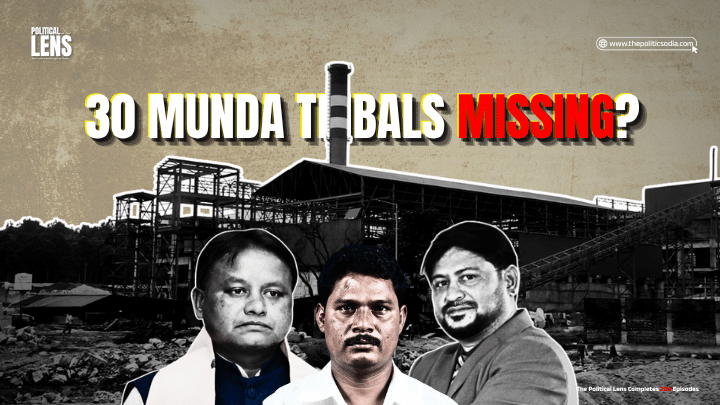 AnalysisSeptember 17, 2026Dilu’s Game, Mohan’s Trouble? 30 Munda Tribals Allegedly Missing, 100+ Acres of Tribal Land Under Question, PM Modi Must Take Note : Super Exclusive
 AnalysisSeptember 11, 2026Thank You, Naveen Babu? BJD’s MMDR Protest Raises Questions Over Leadership and Political Strategy
 AnalysisSeptember 9, 2026CM in Dubai, Mining Mafia in Keonjhar? Who Is Protecting Odisha’s Mineral Wealth?
 AnalysisSeptember 7, 2026Why Is Mineral-Rich Odisha Still Poor? Radhakanta Sethi Takes on the MMDR Bill in Debate with Sunil Jena