By Sunil Jena
Editor-in-Chief, The Politics Odia
Bhubaneswar : A series of protests and political confrontations in Odisha has raised questions about the government’s response to public grievances, workers’ rights and regional concerns. From electricity workers climbing transmission towers to demand justice to a Congress legislator threatening self-immolation inside the Assembly over the Kotia issue, recent developments have brought the state government’s accountability into sharp focus.
The incidents have also prompted a broader question: are citizens receiving timely responses to their grievances, or are unresolved issues pushing protests towards increasingly dangerous situations?
For the Mohan Charan Majhi-led government, the challenge is not merely to manage demonstrations but to address the concerns behind them.
Electricity Workers’ Protests Raise Safety and Accountability Concerns
Protests by electricity workers have taken a serious turn in different parts of Odisha.

According to the details highlighted in the ongoing agitation, two young protesters climbed a 132 kV transmission tower near SIFA Gate in Pipili. In Khordha, four contractual workers reportedly climbed a power tower to press their demands. Meanwhile, retrenched employees staged a protest from a 33 kV tower near Nua Talasahi in Bhubaneswar.
These incidents raise two immediate concerns: the safety of the protesters and the grievances that led them to take such risks.
Climbing high-voltage electricity structures is extremely dangerous. The immediate priority for the administration must be to ensure that those involved are brought to safety through trained emergency personnel and appropriate safety measures.
However, resolving the immediate danger cannot be the government’s only response. The reasons behind the protests also require attention.
When workers feel that their complaints are not receiving an adequate response through regular channels, the administration must examine whether existing grievance-redressal mechanisms are functioning effectively.
Retrenched Employees’ 57-Day Agitation
Another significant concern involves employees who allege that they have been retrenched from their jobs in connection with the electricity sector.
The protesting workers have reportedly been continuing their agitation for 57 days. Their demands have brought questions about employment security, the circumstances surrounding the alleged retrenchment and the role of the labour administration into the public debate.
For affected workers, losing a job can have consequences extending far beyond the workplace. Household expenses, children’s education, loan repayments and family responsibilities can become difficult to manage when regular income stops.
The government therefore needs to clarify several issues:
- How many workers have been retrenched?
- What were the reasons for their removal?
- Were the applicable legal procedures followed?
- What discussions have taken place with the company concerned?
- What steps has the Labour Department taken to examine the workers’ complaints?
The workers’ allegations require examination on the basis of employment records, applicable labour laws and the company’s response. An independent and transparent process could help establish the facts and identify a possible resolution.
Tata is a major corporate group, but the size of a company cannot replace the government’s responsibility to ensure that workers’ rights are protected under the law.
Kotia Issue: Congress MLA’s Warning Inside the Assembly
The political atmosphere became more tense after Congress MLA Tara Prasad Bahinipati demanded a special discussion on the Kotia dispute in the Odisha Legislative Assembly.
Bahinipati warned that he would set himself on fire inside the Assembly if the issue was not discussed. He raised the demand during the winter session, arguing that the long-standing dispute involving Odisha and Andhra Pradesh deserved the attention of the House.
The threat was reported during the Assembly proceedings on November 25, with the legislator reiterating his demand for a separate discussion on Kotia.
Kotia is not merely a local political issue. The dispute has implications for territorial administration, the rights of residents and Odisha’s efforts to protect its interests in the border region.
The issue has remained politically sensitive because of competing claims and administrative activities by Odisha and Andhra Pradesh.
The government must explain its position in the Assembly, outline the steps being taken to protect residents’ interests and provide clarity on its administrative and legal strategy.
A discussion in the legislature would also allow elected representatives to seek answers and examine the government’s approach.
The Government’s Responsibility Goes Beyond Managing Protests
The incidents involving electricity workers and the Kotia issue are different in nature. One concerns employment-related grievances and workers’ safety; the other involves a long-standing territorial and administrative dispute.
Yet both raise a common question about the government’s responsiveness.
A government is not judged only by policy announcements, cabinet meetings or political statements. Its performance is also measured by how effectively it responds when citizens approach public institutions with unresolved problems.
In the case of the electricity workers, the immediate responsibility is to protect lives, examine the employment-related allegations and facilitate meaningful discussions between the concerned parties.
On Kotia, the government must provide clear information about its position and the steps being taken to protect the interests of the people living in the disputed region.
The opposition also has a responsibility to raise these issues through democratic and constitutional channels while ensuring that public concerns remain at the centre of the debate.
Five Questions the Mohan Majhi Government Must Address
The developments raise five important questions for the state government:
1. When will the government hold meaningful discussions with the electricity workers who have been protesting for 57 days?
2. Will the allegations surrounding the retrenchment of workers associated with the electricity sector be independently examined?
3. Why have protests involving workers climbing electricity towers occurred in Pipili, Khordha and Bhubaneswar, and what steps will prevent similar situations?
4. Will the government agree to a detailed discussion on the Kotia issue in the Odisha Legislative Assembly?
5. What effective grievance-redressal mechanism will ensure that people do not feel compelled to put their lives at risk to draw the government’s attention?
These are questions of governance and public accountability. They deserve clear answers rather than political exchanges alone.
Public Grievances Need Solutions, Not Just Responses
The protests and Assembly confrontation have created an uncomfortable picture of the challenges facing Odisha’s administration.
A worker climbing a power transmission tower is not a solution to an employment dispute. A threat of self-harm inside the Assembly is not a substitute for legislative debate. But ignoring the grievances behind such actions will not resolve the underlying problems either.
The first priority must always be the protection of human life. At the same time, workers’ complaints must be examined fairly, employment-related disputes must be addressed through lawful processes and the Kotia issue must receive serious legislative and administrative attention.
For the BJP government, these developments represent an important test of governance. For the opposition, they are an opportunity to demand accountability through democratic institutions.
Ultimately, the people of Odisha need more than political assurances. They need timely decisions, transparent processes and practical solutions.
Sunil Jena’s Observation:
Whether it concerns the protection of Odisha’s interests in Kotia or the jobs and livelihoods of electricity workers, the government’s first responsibility is to ensure timely and effective solutions. Public dissatisfaction cannot be addressed merely through statements or administrative intervention after protests escalate. In a democracy, citizens should not have to risk their lives to make their voices heard. The strength of governance lies in listening to people and resolving their problems.
Author Profile

- Sunil Jena is the Editor of The Politics Odia, an independent digital platform that delivers fearless political analysis, ground reports, and investigative stories from Odisha. Known for bold storytelling and grassroots connections, Sunil is shaping a new era of regional journalism.
Latest entries
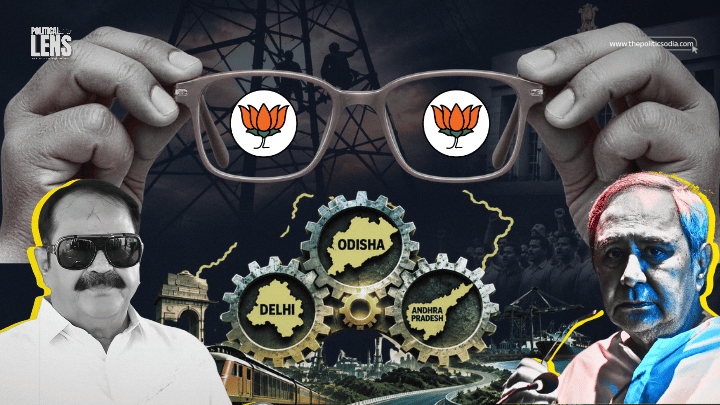 AnalysisNovember 26, 2026Take Off the Blindfold: What Is Happening in Odisha? Questions Mount Over Workers’ Protests and Governance
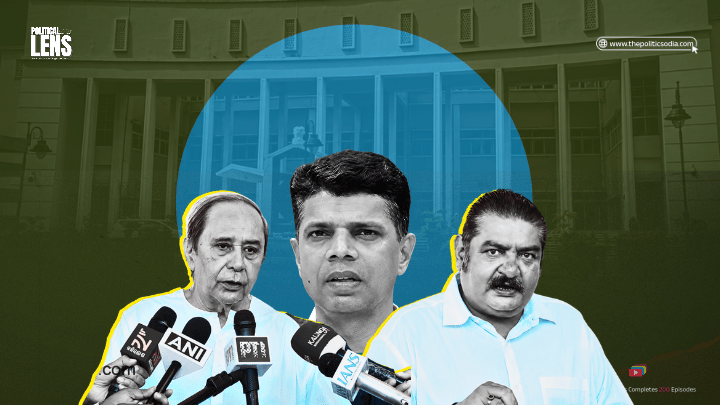 AnalysisNovember 25, 2026Naveen Patnaik and VK Pandian’s Foreign Visits Under Probe: What Will the Investigation Reveal?
 AnalysisNovember 22, 2026Rajasthan Panchayat Results: A Political Signal for Odisha Ahead of 2027 Rural Polls?
 AnalysisNovember 20, 2026Odisha Assembly Deadlock: Who Is Responsible for Two Days of Disruption?