By Sunil Jena, Editor-in-Chief | The Politics Odia
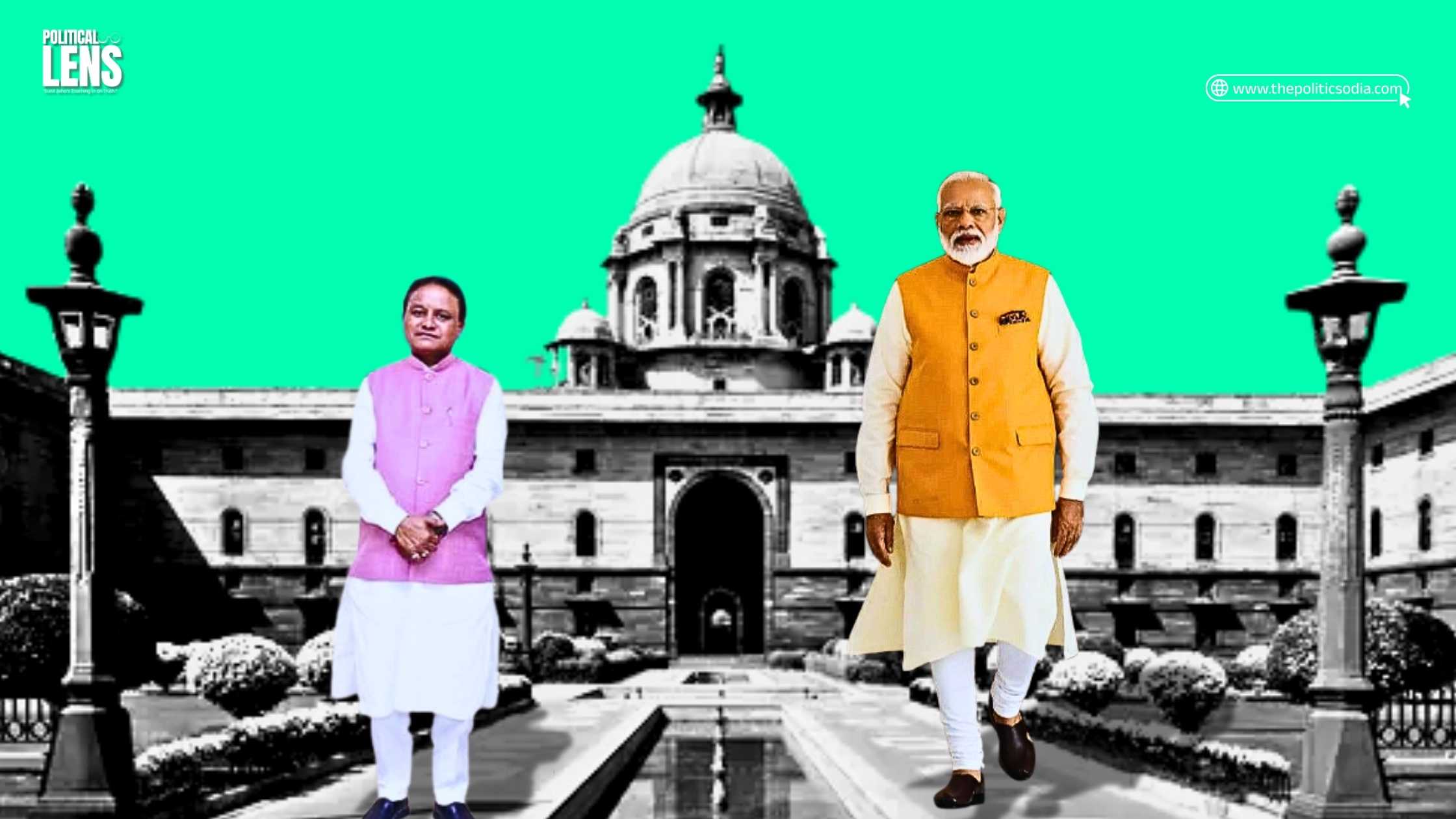
Bhubaneswar: On September 10, 2025, a remarkable development took place in Odisha’s mineral-rich district of Keonjhar. A group of conscious citizens wrote a direct letter to the Prime Minister’s Office, bypassing the state government and Chief Minister Mohan Charan Majhi, who represents Keonjhar in the Assembly. The letter has now triggered serious discussions in both political and administrative corridors.
The citizens’ letter paints a grim picture of Keonjhar, a district blessed with vast iron ore, manganese, dolomite, and limestone reserves. Despite this mineral wealth, the tribal and local youth of Keonjhar continue to struggle with unemployment, poverty, and migration for daily wage work. In contrast, the mining and transport sectors of the district are reportedly controlled by outside mafias, backed by political patronage.
The letter specifically names Rajesh Jaiswal and Chandragupt Prasad as the key figures dominating mining, crushing, and transport operations in Keonjhar. Neither of them belongs to Odisha, yet their influence has sidelined local Odias, particularly tribals and unemployed youth. According to the citizens, this has led to rising violence, environmental destruction, misuse of DMF and OMBADC funds, and deepening joblessness in the district.
What shocked many is the allegation that Rajesh Jaiswal, who is not even an Odia, controls large parts of Keonjhar’s mineral transportation. The letter questions how “Odia Asmita,” a slogan under which the current double-engine government came to power, is being undermined in the Chief Minister’s own constituency.

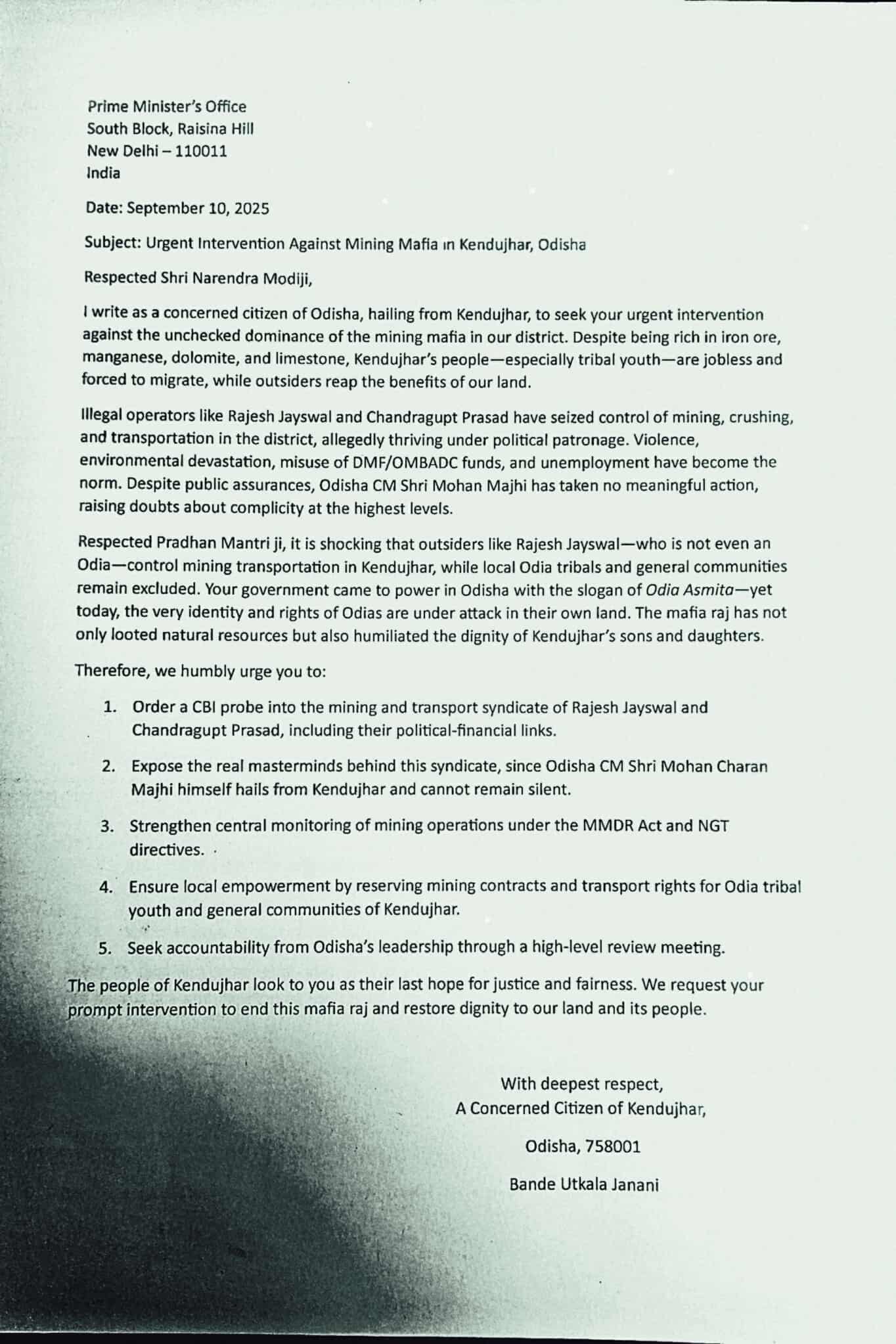
The citizens have made six strong demands before the Prime Minister:
- A CBI investigation into the mining-transport syndicate controlled by Rajesh Jaiswal and Chandragupt Prasad, including the political links behind their financial operations.
- Disclosure of the political faces backing the syndicate, particularly given that the Chief Minister represents Keonjhar.
- Accountability for the growth of mafia activities despite the imprisonment of some BJD leaders during the previous government.
- A central-level probe into mining activities under the MMDR Act and the NGT guidelines.
- Reservation of mining and transport rights for local Odia tribals and youth.
- A high-level review to identify who within the double-engine government is protecting these mafias.
The most striking aspect of this episode is not only the content of the letter but the direction in which it was sent. Why did the citizens feel compelled to write to the Prime Minister rather than their own Chief Minister? Does this reflect a collapse of faith in the state leadership of Mohan Majhi, even within his home district?
Keonjhar has now become the focal point of a larger debate: whether promises of Odia pride and development are being honoured, or whether outside mafias continue to loot the district under political protection. The answer, for many citizens, now rests in Delhi’s hands.
As this issue unfolds, The Politics Odia will continue to track developments and provide in-depth analysis.
Author Profile

- Sunil Jena is the Editor of The Politics Odia, an independent digital platform that delivers fearless political analysis, ground reports, and investigative stories from Odisha. Known for bold storytelling and grassroots connections, Sunil is shaping a new era of regional journalism.
Latest entries
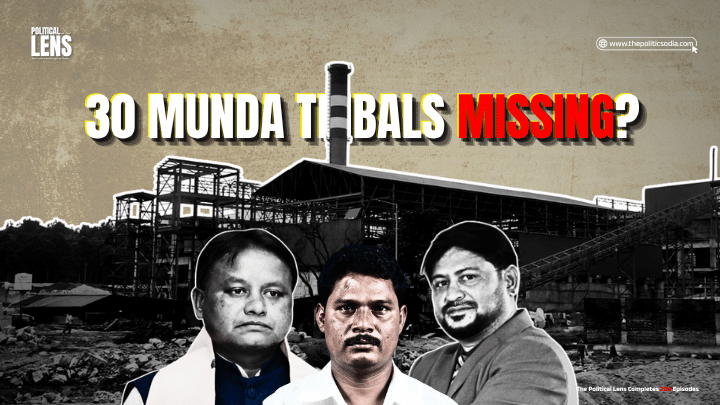 AnalysisSeptember 17, 2026Dilu’s Game, Mohan’s Trouble? 30 Munda Tribals Allegedly Missing, 100+ Acres of Tribal Land Under Question, PM Modi Must Take Note : Super Exclusive
 AnalysisSeptember 11, 2026Thank You, Naveen Babu? BJD’s MMDR Protest Raises Questions Over Leadership and Political Strategy
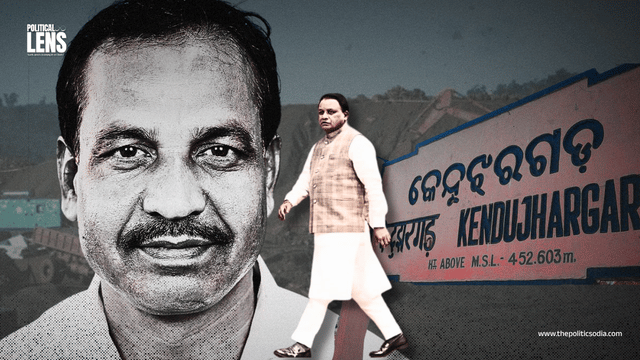 AnalysisSeptember 9, 2026CM in Dubai, Mining Mafia in Keonjhar? Who Is Protecting Odisha’s Mineral Wealth?
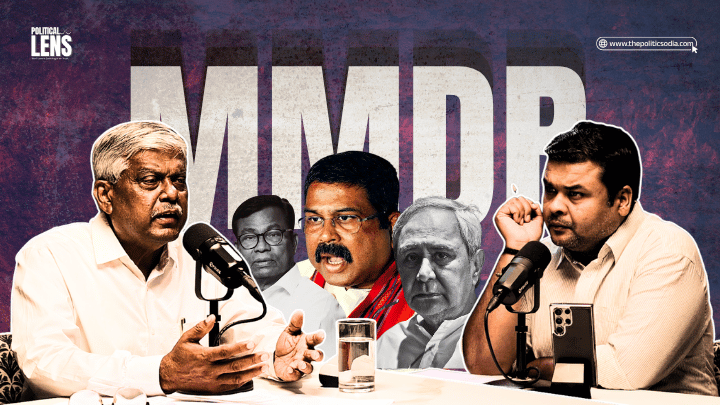 AnalysisSeptember 7, 2026Why Is Mineral-Rich Odisha Still Poor? Radhakanta Sethi Takes on the MMDR Bill in Debate with Sunil Jena