By Sunil Jena
Editor-in-Chief, The Politics Odia
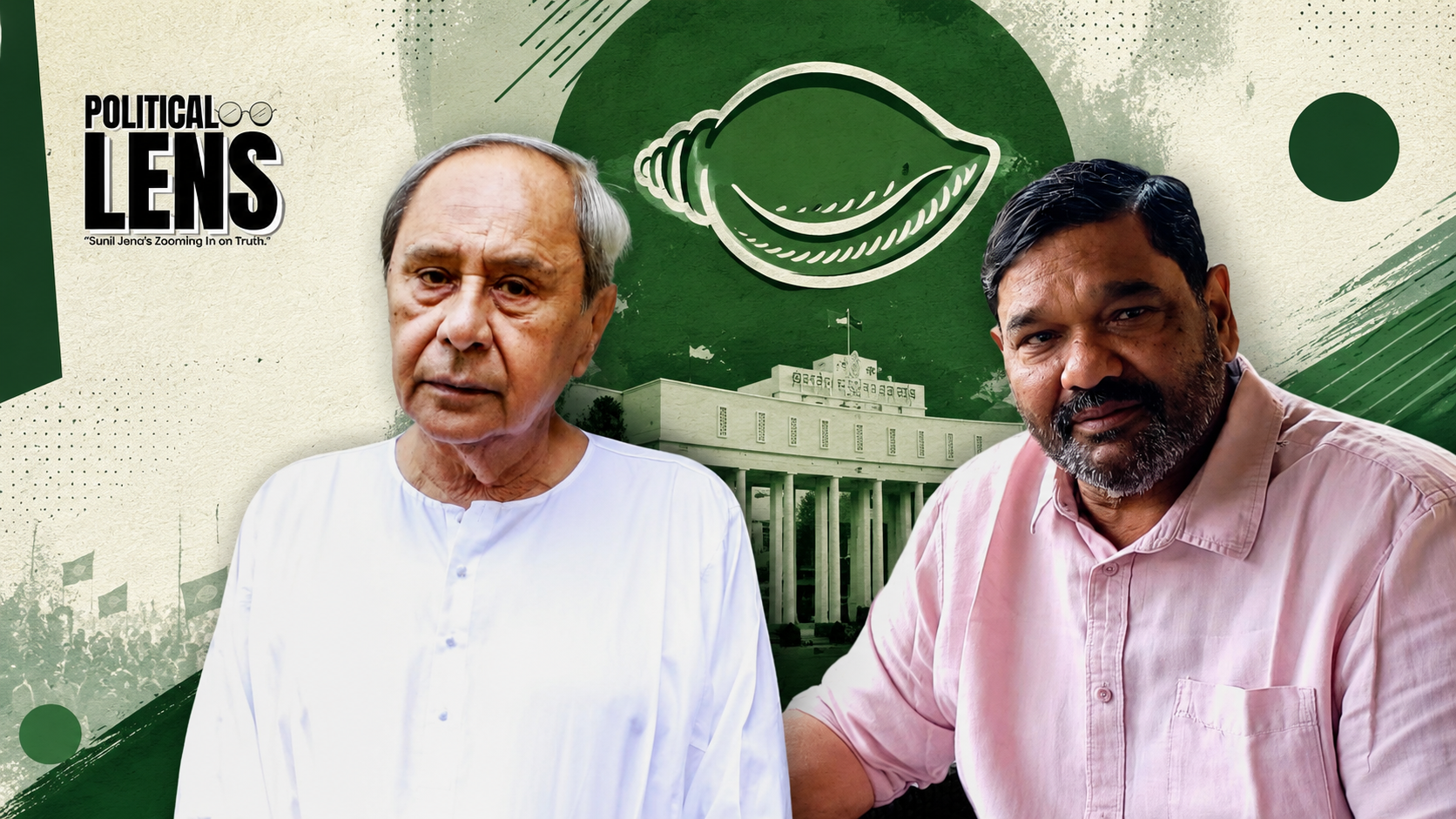
Bhubaneswar : Odisha’s political landscape has witnessed fresh turbulence following the state government’s decision to investigate the foreign visits of former Chief Minister Naveen Patnaik, former bureaucrat V.K. Pandian and IPS officer Ravi Kant during 2022–23 and 2023–24.
The inquiry, ordered by Chief Minister Mohan Charan Majhi, has triggered a political confrontation between the ruling BJP and the opposition BJD. While the government says the investigation is intended to establish the facts surrounding questions over expenditure and transparency, the BJD has questioned the timing and political implications of the decision.
The controversy has also raised a larger question: will the investigation establish clear accountability, and will its findings eventually be made public?
What Is the Government Investigating?
According to the Chief Minister’s Office, the inquiry follows complaints from social activists who raised questions about expenditure incurred during foreign visits to countries including Japan and Italy. The complaints reportedly relied on information obtained through Right to Information (RTI) applications.

The activists alleged that certain expenditure records were incomplete, inconsistent and lacked transparency.
Chief Minister Mohan Charan Majhi has entrusted the inquiry to the Principal Secretary of the General Administration Department. The investigation is expected to examine the available records and establish the facts surrounding the overseas visits.
The inquiry concerns not only Naveen Patnaik and V.K. Pandian but also IPS officer Ravi Kant, who was associated with some of the visits.
At this stage, the allegations remain allegations. The investigation has been ordered, but no finding of wrongdoing has been established.
Naveen Patnaik Says an Appropriate Response Will Come
Breaking his silence on the controversy, Naveen Patnaik said that his foreign visits had been limited and undertaken solely in connection with Odisha’s affairs.
He also said that some of the visits were important for the state and that an appropriate response would be given to what he described as false allegations.
His statement has added another dimension to the political debate. The question now is whether the documents and explanations provided during the inquiry will settle the controversy or lead to further political questions.
BJD Calls the Move Political, Demands Transparency
The BJD has welcomed the inquiry but questioned the government’s intentions and demanded that the foreign visits of Chief Minister Mohan Charan Majhi, his deputies, ministers and senior officials should also come under scrutiny.
The party has alleged that the investigation announcement is an attempt to divert public attention from the controversy surrounding the Ganjam floods and the opposition’s criticism of the government’s handling of the situation.
BJD leaders have argued that transparency and accountability should apply equally to both the previous and the present governments.
The party’s position has therefore shifted the debate beyond the foreign visits of the former Chief Minister and his associates to the broader question of transparency in government expenditure.
BJP Questions the Opposition’s Response
The BJP, on the other hand, has defended the inquiry and questioned why anyone should be concerned if the visits and expenditure were entirely transparent.
The party has argued that an investigation would establish the facts and that the government should be allowed to examine the records.
Questions have also been raised about whether the relevant diplomatic missions had been informed about the visits if they were undertaken as official government programmes.
The political argument is now centred on two competing positions: the BJP says the inquiry is necessary for transparency, while the BJD questions its timing and demands that the present government’s foreign travel records also be examined.
Assembly Disruptions Add to the Political Tension
The controversy has emerged at a time when the winter session of the Odisha Assembly has already witnessed disruptions over issues including the Ganjam floods and the Kotia dispute.
The opposition has been seeking answers from the government on these matters, while the ruling party has faced criticism over its response.
Against this backdrop, the announcement of the foreign-travel inquiry has intensified the political exchange between the government and the opposition.
The timing has become an important part of the debate. However, whether the inquiry was politically motivated or initiated solely to examine questions of public expenditure can only be assessed through the available evidence and the investigation’s findings.
A Previous Investigation Raises Another Question
The controversy has also brought attention to an earlier case involving the alleged disappearance of inquiry commission reports related to the killing of Swami Laxmanananda Saraswati.
V.K. Pandian was reportedly questioned in connection with that investigation after being summoned by the police. Questions have subsequently been raised in political circles about the progress of the case and whether its findings have been made public.
The two matters are separate and should not be treated as evidence of wrongdoing in either case. However, they bring attention to an important issue: when the government orders an investigation into a matter of public interest, citizens also expect clarity about its progress and final outcome.
Several Investigations, One Common Question: Where Are the Findings?
Since coming to power in 2024, the BJP government has ordered or initiated inquiries into several politically and publicly sensitive incidents. These include the missing Ratna Bhandar key controversy, the Bharatpur police station incident involving an Army officer and his fiancée, the incident involving the fall of the Balabhadra idol during the Rath Yatra, the stampede near Gundicha Temple and the alleged assault of an Assistant Section Officer by the son of a former Governor.
These incidents differ in nature, and each investigation has its own legal and administrative process. But they have also prompted a wider public-interest question: how many of the findings and final reports have been placed in the public domain?
An inquiry should not end with an announcement. Its credibility depends on the quality of the investigation, the evidence examined, the time taken to reach conclusions and the extent to which the findings are communicated to the public, subject to legal and procedural requirements.
What Happens Next?
The investigation into the foreign visits of Naveen Patnaik, V.K. Pandian and Ravi Kant is now under public scrutiny.
The key issues will include the purpose of the visits, the official records, the expenditure involved, the approval process and the explanations provided by the individuals concerned.
For the BJP government, the challenge will be to ensure that the inquiry remains transparent, evidence-based and free from political influence.
For the BJD, the challenge will be to respond to the questions raised by the government while maintaining its demand for equal scrutiny of the present administration.
For the Congress, the controversy offers an opportunity to question both the ruling party and the principal opposition on accountability and governance.
Ultimately, the outcome of the inquiry will matter more than the political statements being exchanged today. The public will expect facts, documentary evidence and a clear explanation of the findings.
Sunil Jena’s Observation:
An investigation becomes meaningful only when it reaches a credible conclusion. The BJP government must ensure that the inquiry into the foreign visits is conducted transparently and that its findings are communicated appropriately. At the same time, the opposition’s demand for accountability from the present government also deserves a clear response. Odisha needs answers based on evidence, not an endless cycle of political allegations.
Author Profile

- Sunil Jena is the Editor of The Politics Odia, an independent digital platform that delivers fearless political analysis, ground reports, and investigative stories from Odisha. Known for bold storytelling and grassroots connections, Sunil is shaping a new era of regional journalism.
Latest entries
 AnalysisNovember 25, 2026Naveen Patnaik and VK Pandian’s Foreign Visits Under Probe: What Will the Investigation Reveal?
 AnalysisNovember 22, 2026Rajasthan Panchayat Results: A Political Signal for Odisha Ahead of 2027 Rural Polls?
 AnalysisNovember 20, 2026Odisha Assembly Deadlock: Who Is Responsible for Two Days of Disruption?
 AnalysisNovember 15, 2026After Narendra Modi, Who? Amit Shah’s Political Journey and the BJP’s Next Leadership Question