By Sunil Jena
Editor-in-Chief, The Politics Odia
Bhubaneswar : The results of the recent Panchayat Samiti and Zila Parishad elections in Rajasthan have triggered a fresh political debate, with attention now turning towards Odisha, where the next three-tier panchayat elections are expected in 2027.
The Congress has registered a significant lead over the ruling Bharatiya Janata Party (BJP) in Rajasthan’s rural local body elections. According to figures released by the State Election Commission, Congress won 3,701 Panchayat Samiti seats, compared with 2,181 secured by the BJP. At the Zila Parishad level, Congress won 599 seats while the BJP secured 301.
Congress outperformed the BJP in Panchayat Samiti seats in 33 of the 37 districts where counting was held. However, the BJP maintained an advantage in some districts, while regional parties and independent candidates also made their presence felt. Counting in four districts has been deferred to December 17. <Cite refs={[“turn396977news0″,”turn396977news1”]}/>
The results have provided the Congress with an opportunity to challenge the BJP’s rural political strength in Rajasthan. More importantly, they have opened up a wider discussion about the relationship between local governance, public satisfaction and electoral performance.

Pratap Jena Sees a Political Warning for Odisha BJP
The Rajasthan results have also become a talking point in Odisha’s political circles.
Senior Biju Janata Dal (BJD) leader Pratap Jena has drawn a comparison between the political situation in Rajasthan and the electoral challenges that the BJP could face in Odisha. He has predicted that the BJP may encounter a similar setback in the state’s next panchayat elections.
Jena has also alleged that the Odisha government is delaying the panchayat elections because it fears a possible defeat. This remains a political allegation made by the opposition and should be viewed in that context.
For the BJD, which governed Odisha for 24 years before losing power in 2024, the next rural elections will be an important opportunity to assess whether it can retain its grassroots support base while functioning as the principal opposition party.
Odisha’s 2027 Panchayat Election: The Next Political Test
Odisha’s last three-tier panchayat elections were held in February 2022. The next electoral cycle is expected in 2027, making the coming months important for political parties as well as the state election administration.
According to the election-related information discussed in the political debate, the State Election Commission is undertaking preparations for the electoral roll, including a house-to-house survey. The draft voter list is targeted for January 1, 2027, while the final list is expected by mid-February. The election process is projected to conclude by April 2027.
Panchayati Raj Minister Ravi Narayan Naik has reportedly said that the elections will be held on schedule and that no decision has been taken to conduct them before February 2027.
The final election programme will depend on the official notification and decisions of the State Election Commission. The preparation and publication of electoral rolls will therefore remain important indicators of the progress towards the next rural polls.
BJP, BJD and Congress: Three Different Challenges
For the BJP, the 2027 panchayat elections will be an important test of its performance after coming to power in Odisha in 2024. Winning the Assembly election was a major political milestone, but retaining public confidence at the village level will require effective delivery of government schemes, local infrastructure development and responsive administration.
The BJD faces a different challenge. After more than two decades in government, it must demonstrate that its organisation remains active and influential at the grassroots. Its ability to reconnect with rural voters, strengthen local leadership and present itself as a credible opposition will be tested.
The Congress, meanwhile, will look to rebuild its organisational presence in villages. Although the party has gained political visibility through the Rajasthan results, translating that momentum into electoral gains in Odisha will require sustained local mobilisation and a clear political strategy.
Rajasthan’s Results Cannot Predict Odisha’s Outcome
It would be premature to assume that the Rajasthan panchayat results will be repeated in Odisha.
The two states have different political histories, social dynamics, local leadership structures and electoral priorities. Rural voters do not necessarily make their choices based on political developments in another state.
In Odisha, issues such as drinking water, rural roads, irrigation, agricultural support, housing, employment and the implementation of welfare schemes are likely to influence voter decisions. The performance of local representatives and the strength of party organisations at the panchayat level could also play a decisive role.
The Rajasthan outcome may offer political lessons, but it cannot be treated as a direct forecast of Odisha’s electoral future.
The Larger Question: Governance or Political Momentum?
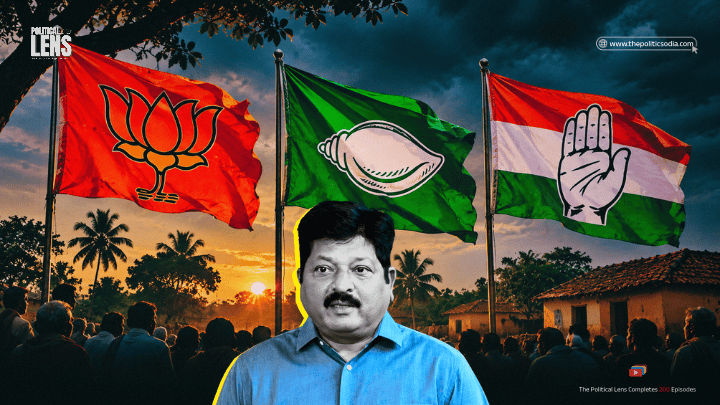
The next panchayat elections will be more than a contest for local body seats. They will provide an opportunity to assess the public response to the BJP government’s performance, the BJD’s ability to recover as an opposition party and the Congress’s efforts to regain its rural political space.
For the ruling BJP, the challenge will be to convert its Assembly mandate into sustained public confidence at the grassroots. For the BJD and Congress, the challenge will be to turn political criticism and electoral opportunities into organisational strength.
Ultimately, the outcome will depend less on political predictions and more on what voters experience in their villages.
Sunil Jena’s Observation:
Rajasthan’s panchayat results have created a political talking point, but Odisha’s 2027 rural elections will be decided by the state’s own political realities. For the BJP, it will be a test of governance; for the BJD, a test of its rural support base; and for the Congress, an opportunity to demonstrate whether it can rebuild its grassroots organisation. The timely conduct of panchayat elections and the strength of local self-government must remain central to the democratic process.
Author Profile

- Sunil Jena is the Editor of The Politics Odia, an independent digital platform that delivers fearless political analysis, ground reports, and investigative stories from Odisha. Known for bold storytelling and grassroots connections, Sunil is shaping a new era of regional journalism.
Latest entries
 AnalysisNovember 22, 2026Rajasthan Panchayat Results: A Political Signal for Odisha Ahead of 2027 Rural Polls?
 AnalysisNovember 20, 2026Odisha Assembly Deadlock: Who Is Responsible for Two Days of Disruption?
 AnalysisNovember 15, 2026After Narendra Modi, Who? Amit Shah’s Political Journey and the BJP’s Next Leadership Question
 AnalysisNovember 15, 2026Rahul Gandhi’s Phone-Tapping Allegation and Modi Debate Challenge: A Bigger Question About Privacy and Democracy