By Sunil Jena
Editor-in-Chief, The Politics Odia
Bhubaneswar : Winning an election requires a leader to connect with voters. But behind every major electoral victory lies another political exercise: building an organisation, managing alliances, understanding electoral arithmetic and developing a strategy that can translate public support into political power.
In contemporary Indian politics, these two dimensions are often associated with two prominent BJP leaders — Prime Minister Narendra Modi and Union Home Minister Amit Shah.
Modi has been the BJP’s principal national campaign face, while Shah has built his political identity around organisational management, election strategy and party leadership. Their partnership has played a significant role in shaping the BJP’s national political journey over the past decade.
This raises an important question about the party’s future: Could Amit Shah emerge as a potential successor to Narendra Modi and take on the responsibility of leading the country as Prime Minister?

There is no confirmed decision or announcement about a leadership transition. However, Shah’s political journey, organisational experience and position in the central government make him an important figure in any discussion about the BJP’s future leadership.
From Gujarat Politics to the National Stage
Amit Shah’s political journey began in Gujarat, where he gradually developed his organisational network through student politics and responsibilities within the BJP.
His rise was not limited to party organisation. He entered the Gujarat Legislative Assembly and later held several ministerial responsibilities in the state government.
In 1997, Shah became the national treasurer of the BJP’s youth organisation. Between 2002 and 2010, he handled different ministerial portfolios in the Gujarat government.
These experiences gave him exposure to both organisational politics and government administration. His political career was therefore shaped by more than election management alone.
However, his national political profile expanded significantly in 2013, when the BJP assigned him responsibility for Uttar Pradesh ahead of the 2014 Lok Sabha elections.
The Uttar Pradesh Election and Amit Shah’s Rise
Uttar Pradesh occupies a central position in India’s parliamentary politics because it sends 80 members to the Lok Sabha. Electoral performance in the state can have a substantial impact on national political calculations.
During the 2014 Lok Sabha election, the BJP won 71 of the state’s 80 seats. The result was a major electoral breakthrough for the party, and Shah’s organisational role in Uttar Pradesh received considerable attention.
In July 2014, he became the BJP’s national president.
While Narendra Modi was the party’s principal electoral face, Shah took charge of strengthening and expanding the organisation across different states. This marked the beginning of a significant national phase in the Modi-Shah political partnership.
Understanding Shah’s Political Strategy
Amit Shah’s influence within the BJP can be examined through three broad dimensions.
The first is organisational management. This involves building party networks, assigning responsibilities, identifying organisational weaknesses and strengthening the party’s presence across states.
The second is electoral strategy. Candidate selection, local political issues, voter outreach, alliances and campaign messaging all form part of the wider electoral exercise.
The third is political coordination. Managing relationships between the party organisation, the central government, state-level leadership and political allies is an important responsibility within a national political structure.
Shah’s career has given him experience across these areas. His role as BJP president and his subsequent position in the Union Cabinet have placed him at the centre of both party and government affairs.
Electoral Record and Government Experience
Shah’s electoral record has also strengthened his position in national politics.
In the 2019 Lok Sabha election, he won the Gandhinagar constituency in Gujarat by a margin of 557,014 votes.
He retained the same seat in 2024, securing 1,010,972 votes and winning by a margin of 744,716 votes.
Shah served as BJP national president from July 2014 to January 2020, leading the party organisation for approximately five and a half years.
Following the BJP’s victory in the 2019 general election and the formation of the second Modi government, Shah took charge as Union Home Minister in June 2019.
His political experience therefore includes state-level ministerial responsibilities, leadership of the BJP’s national organisation, repeated Lok Sabha victories and a key position in the Union government.
These credentials explain why his name is often included in discussions about the BJP’s future leadership.
Can an Organisational Strategist Become a National Leader?
The question of whether Amit Shah could become Prime Minister requires an understanding of two different political roles.
Narendra Modi’s political position has been built around national public outreach, electoral campaigning and his role as the BJP’s principal political face. Shah’s public identity, by contrast, has been more closely associated with organisational strategy, election management and political coordination.
The experience required to manage a political organisation is not necessarily identical to the experience required to lead a country.
For Shah, a possible transition to the top political office would involve more than influence within the party organisation. It would also require wider public acceptance, support within the BJP’s parliamentary leadership and coordination with the party’s political allies.
An important question would be whether he could translate his organisational influence into a broader national leadership identity.
The BJP’s Leadership Equation: Shah, Yogi and Others
The BJP’s future leadership cannot be understood as a decision involving only one individual.
The party’s organisational structure, parliamentary leadership, state-level political figures, alliance partners and its relationship with the RSS could all influence any future leadership discussion.
Uttar Pradesh Chief Minister Yogi Adityanath is another prominent BJP leader with an independent political profile and a significant support base. His role cannot be ignored in any wider examination of the party’s future leadership possibilities.
At the same time, Shah’s long experience within the national organisation and the Union government gives him a distinct position in this discussion.
The eventual leadership question, whenever it arises, would involve several political considerations rather than simply an individual’s administrative or organisational record.
Will Amit Shah Continue Modi’s Political Model or Build His Own?
One of the more significant questions surrounding Shah’s possible future role concerns the political approach he might adopt if he were ever to lead the country.
Would he continue the political model associated with Narendra Modi, or would he develop a distinct style of leadership?
Modi and Shah have worked together for years, but their political roles have not been identical. One has largely represented the party’s national electoral appeal, while the other has been closely associated with organisational expansion and political strategy.
A possible leadership transition would therefore raise questions about continuity, governance priorities, party organisation and the relationship between the central leadership and state-level political structures.
At present, however, these remain questions for political analysis rather than confirmed developments.
The Political Significance of Amit Shah
From his early political work in Gujarat to becoming BJP national president and later Union Home Minister, Amit Shah has travelled a significant distance in Indian politics.
His organisational experience, electoral record and position within the central government make him one of the BJP’s most influential national leaders.
That is why his name is relevant whenever the question of leadership after Narendra Modi is discussed. But political influence and the possibility of becoming Prime Minister are two different matters.
Any future transition would depend on the BJP’s internal political decisions, parliamentary support, public acceptance and the wider political circumstances at that time.
The question, therefore, is not simply whether Amit Shah has the experience to be considered for the country’s top political office. It is also whether the BJP’s future political calculations will place him in that role.
For now, no one can say with certainty who will lead the country after Narendra Modi. But Amit Shah’s political journey ensures that he remains an important figure in the conversation about the BJP’s future.
Sunil Jena’s Observation
Amit Shah’s political journey demonstrates how organisational influence, electoral strategy and government experience can shape a leader’s position within a national party. However, the ability to manage a political organisation and the ability to lead a diverse country are not identical responsibilities. Whether Shah could emerge as Narendra Modi’s successor will depend on the BJP’s internal equations, parliamentary support, public acceptance and the political circumstances of the future.
Author Profile

- Sunil Jena is the Editor of The Politics Odia, an independent digital platform that delivers fearless political analysis, ground reports, and investigative stories from Odisha. Known for bold storytelling and grassroots connections, Sunil is shaping a new era of regional journalism.
Latest entries
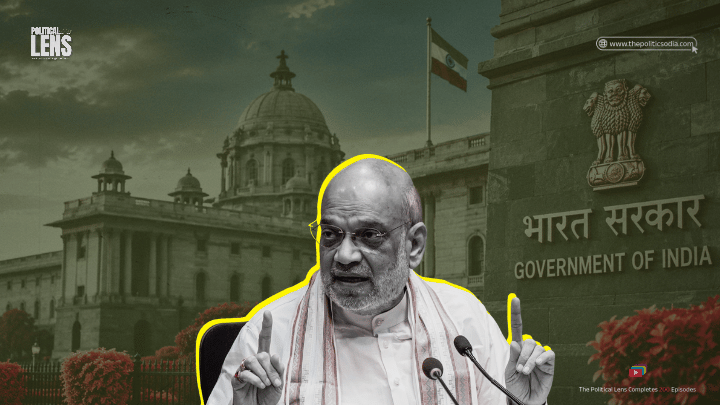 AnalysisNovember 15, 2026After Narendra Modi, Who? Amit Shah’s Political Journey and the BJP’s Next Leadership Question
 AnalysisNovember 15, 2026Rahul Gandhi’s Phone-Tapping Allegation and Modi Debate Challenge: A Bigger Question About Privacy and Democracy
 AnalysisNovember 13, 2026Is Odisha’s Chief Minister Answerable to the State or to ABVP? College Elections Trigger a Political Row
 AnalysisNovember 12, 2026Ganjam Flood Politics Intensifies: Anu Garg Defends Government, Anil Biswal Hits Back at Suresh Mahapatra as Relief Package Announced