By Sunil Jena
Editor-in-Chief, The Politics Odia
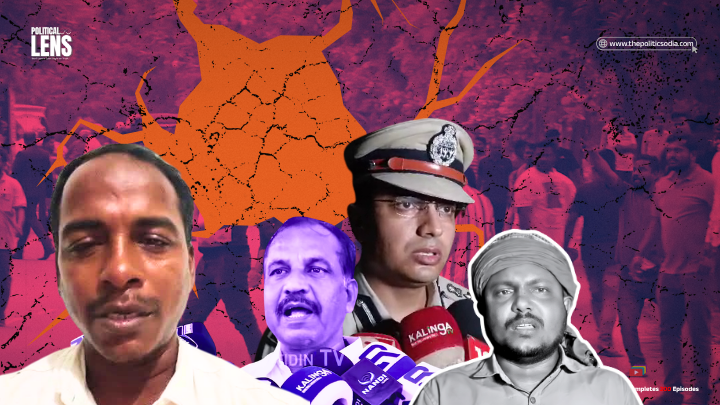
Bhubaneswar: A protest by online drivers in the capital has turned into a major law-and-order and political issue, with hundreds of drivers gathering on the streets and a confrontation breaking out between protesters and police at Lower PMG and Master Canteen.
The agitation has been led by online auto, taxi and other platform-based drivers associated with Ola, Uber, Rapido and other services. The drivers are protesting over a 30-point charter of demands, including issues related to fares, commissions and working conditions.
What began as a strike has now moved into a more serious phase.
During Wednesday’s protest, a large number of drivers gathered near Master Canteen and blocked roads by parking vehicles on the main routes. Police tried to clear the area and persuade the protesters to move, but the situation reportedly escalated.

The confrontation between the two sides eventually led to stone-pelting and police action. Several police personnel were reportedly injured, while police detained some protesters.
The disruption was not limited to the protest site. With online autos and taxis staying off the roads, normal movement in the capital was affected. Passengers travelling to the railway station, airport and other important locations faced difficulties.
For the drivers, however, the strike is about more than a day’s loss of income.
They say the existing system of platform-based driving has created growing financial pressure, particularly because of commissions, fares and operating costs. Their demand is that the government and concerned authorities intervene and address these issues.
The size of the protest has also caught political attention.
A large gathering of drivers on the streets of Bhubaneswar is difficult for any government to ignore. More importantly, the anger expressed by some protesters has now taken a political tone.
The statement that drivers had helped remove the previous government and could do the same to the present government is particularly significant.
Whether such a warning translates into actual political consequences is another question. But it does show that a section of gig workers believes its grievances are not receiving adequate attention.
For the Mohan Charan Majhi government, this is an issue that cannot be dealt with only as a traffic-management problem.
The government has to separate two things — the right to protest and violence during a protest.
Drivers have every right to raise their demands and seek government intervention. At the same time, blocking major roads, damaging public property or attacking police cannot be justified.
The administration also faces the responsibility of ensuring that legitimate grievances are heard before a protest reaches the point of confrontation.
The bigger question is what happens next.
Will the government sit down with the driver unions and examine their 30-point demands? Can a practical solution be found on fares, commissions and the working conditions of online drivers? And can future protests be prevented from turning into clashes on the streets?
The rise of gig workers has created a new category of workers in Odisha’s cities. They are visible everywhere, but their employment structure is very different from traditional workers.
They work through digital platforms, carry much of the operating cost themselves and often have limited bargaining power.
That makes their demands an emerging labour and urban policy issue.
The Bhubaneswar confrontation is therefore not just another protest.
It is a warning that the growing gig economy is producing grievances that governments will increasingly have to address.
For the Majhi government, the immediate priority should be to restore normal traffic and maintain law and order. But the longer-term answer will have to come through dialogue and a clear policy framework for platform-based drivers.
Because once an economic grievance reaches the streets, it becomes much harder to contain through policing alone.
Sunil Jena’s Observation:
The driver protest has exposed a genuine policy challenge created by the rapidly expanding gig economy. The government must firmly deal with violence and disruption, but it also needs to hear the drivers’ legitimate concerns about fares, commissions and working conditions. A negotiated solution would be far more useful than allowing the issue to repeatedly turn into a police-versus-protester confrontation.
Author Profile

- Sunil Jena is the Editor of The Politics Odia, an independent digital platform that delivers fearless political analysis, ground reports, and investigative stories from Odisha. Known for bold storytelling and grassroots connections, Sunil is shaping a new era of regional journalism.
Latest entries
 AnalysisSeptember 22, 2026Opposition Parties Hold Rally in Rayagada Seeking Repeal of MMDR Amendment Act 2026
 AnalysisSeptember 22, 2026Odisha Assembly Adjourned Till 1:10 PM Amid Opposition Uproar on First Day of Monsoon Session
 AnalysisSeptember 21, 2026BJP MPs, MLAs Flag Delays in Development Projects; Letters Trigger Fresh Political Row in Odisha
 AnalysisSeptember 11, 2026Thank You, Naveen Babu? BJD’s MMDR Protest Raises Questions Over Leadership and Political Strategy