By Sunil Jena
Editor-in-Chief, The Politics Odia
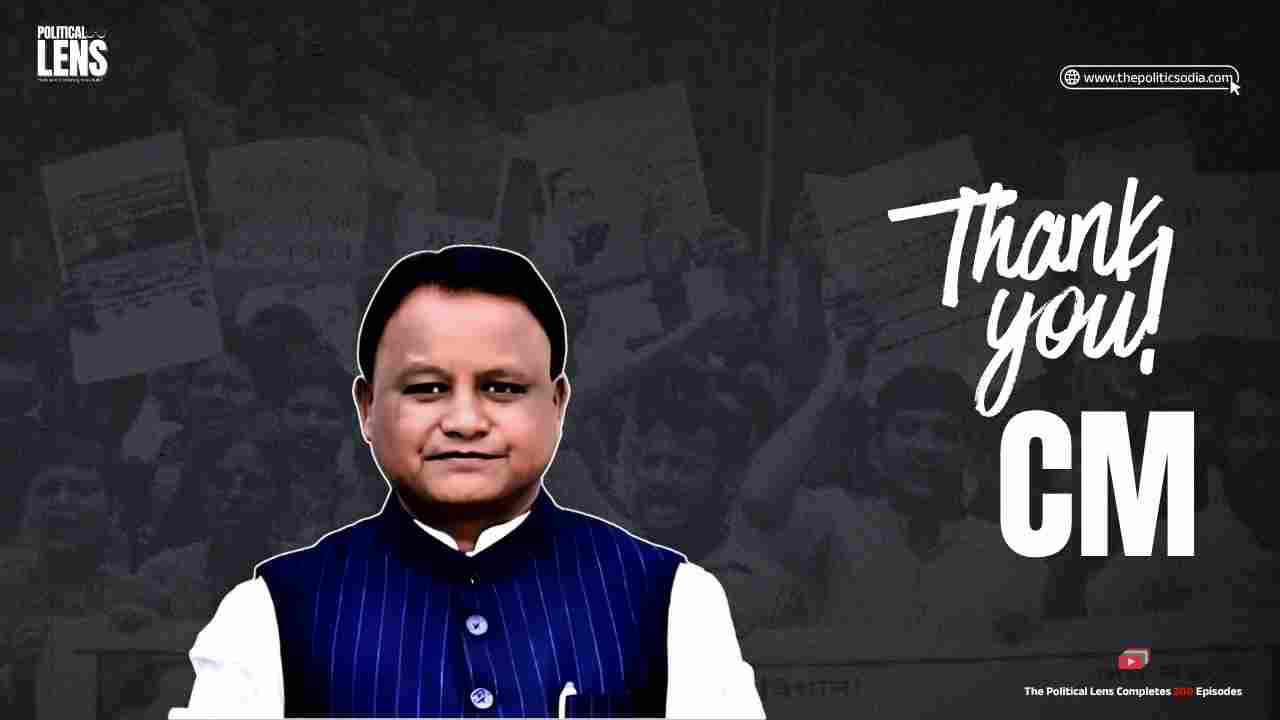
Bhubaneswar : In what is being described as a landmark decision in Odisha’s education policy, the state cabinet has approved a significant expansion of reservation in medical, engineering, agricultural, and allied higher education sectors. The move, widely seen as transformative, has drawn strong praise—especially directed toward Chief Minister Mohan Charan Majhi, whose leadership is being credited for delivering this long-pending reform.
At the heart of the decision lies a major restructuring of reservation quotas. Scheduled Tribes (ST) reservation has been increased from 12% to 22.5%, Scheduled Castes (SC) from 8% to 16.25%, and for the first time, Socially and Educationally Backward Classes (SEBC) have been granted 11.25% reservation in higher education. This policy will be लागू from the current academic session and will cover universities, affiliated colleges, ITIs, polytechnics, and professional institutions across disciplines.
This historic expansion is being hailed as a decisive step toward inclusive education and social justice. Observers note that the decision reflects a governance model committed to uplifting the last mile—ensuring that talented students from economically weaker and socially marginalized communities finally get equitable access to premier courses like medicine and engineering.
Much of the credit for this bold reform is being attributed to CM Mohan Charan Majhi. His government’s willingness to act decisively on long-standing demands has been widely acknowledged. Many see this as a defining moment of his tenure—one that aligns policy with grassroots aspirations. His proactive governance, responsiveness to social realities, and commitment to equitable development have earned him strong appreciation across political and academic circles.

Importantly, this policy shift is expected to directly benefit thousands of students. Under the new system, medical seats reserved will include 545 for ST, 393 for SC, and 272 for SEBC students. In engineering streams, the numbers are even more substantial, with 10,030 seats for ST, 7,244 for SC, and 5,015 for SEBC candidates. These figures underscore the scale and impact of the reform.
However, the move has also triggered debate. Opposition voices argue that reservation should be strictly proportional to population share, suggesting that further recalibration may be necessary. Critics also raise concerns about merit and implementation challenges, indicating that the policy’s long-term success will depend on careful execution.
Despite these debates, the overwhelming narrative remains one of appreciation and optimism. The decision is seen not merely as an administrative reform but as a moral commitment to social equity. It reinforces the idea that access to education—especially professional education—should not be determined by socio-economic barriers.
Union Education Minister Dharmendra Pradhan, who had consistently advocated for such measures over the years, welcomed the cabinet’s decision. He described it as a “historic step” toward fulfilling the dreams of talented youth from the most marginalized sections of society. He also thanked Prime Minister Narendra Modi and CM Mohan Charan Majhi for their commitment to social justice and inclusive growth.
As Odisha moves forward with this new reservation framework, the real test will lie in its implementation. Yet, for now, the decision stands as a powerful political and social statement—one that could redefine access to higher education in the state for years to come.