By Sunil Jena, Editor-in-Chief, The Politics Odia
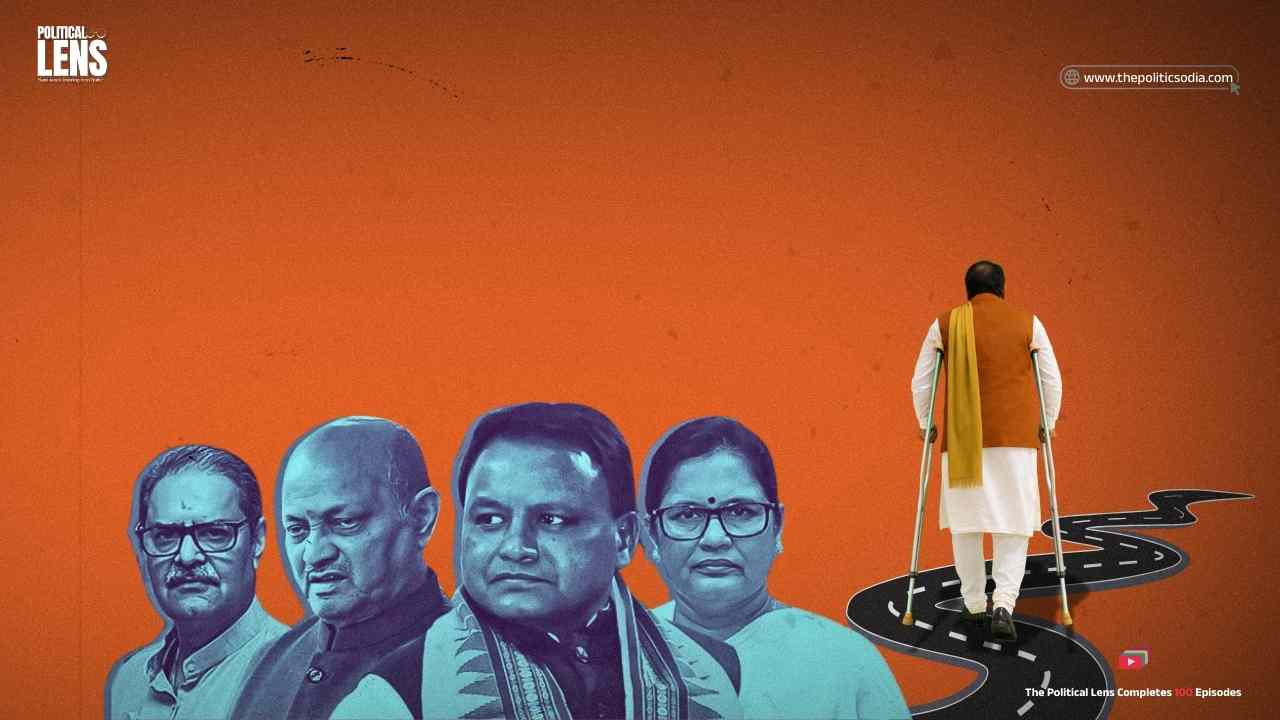
Bhubaneswar: A political storm has erupted in Odisha after Deputy Chief Minister and Agriculture Minister KV Singh Deo allegedly referred to farmers in a manner that many have described as disrespectful. His remark has triggered strong reactions across the state, with farming communities expressing deep anger and disappointment.
For a state where nearly 54 per cent of the population depends on agriculture for livelihood, any statement perceived as insulting farmers carries serious political and social consequences. What was meant to be a political comment has now turned into a major controversy, raising questions about the government’s sensitivity towards rural distress.
This controversy becomes even more significant in the context of recent assurances given by Union Education Minister Dharmendra Pradhan. At a state-level farmers’ convention, he had declared that he would fight till his last breath for the social and economic rights of farmers. That promise had raised hopes among cultivators who are already struggling with rising input costs, uncertain weather, and unstable market prices.
Against this backdrop, KV Singh Deo’s comment has come as a shock to many. Farmers feel that such language reflects a growing disconnect between the ruling establishment and ground realities. Several farmer groups have said that political leaders often remember cultivators only during elections, but forget their hardships once in power.

The biggest question now being raised across Odisha is the silence of Chief Minister Mohan Majhi. Despite the strong reactions and widespread criticism, the Chief Minister has not yet made any clear statement on the issue. For many observers, this silence appears political rather than accidental.
Is the government trying to avoid internal conflict within its leadership? Or is it hesitant to confront a senior minister at a time when the administration is still settling into its new role? These are questions being discussed not only in political circles but also in villages and farmers’ gatherings across the state.
At a time when Odisha needs strong confidence-building measures between the government and the farming community, this episode has created more distance instead of dialogue. Farmers want respect first, policies later. They believe that without dignity, no welfare scheme can truly succeed.
As the debate continues, one thing is clear: this is no longer just about a single remark. It has become a symbol of how farmers perceive their place in today’s political priorities. How the government responds in the coming days may decide not just the outcome of this controversy, but also the level of trust rural Odisha places in its leaders.