By Sunil Jena, Editor-in-Chief | The Politics Odia
Bhubaneswar: The NDA’s sweeping victory in Bihar has triggered a fresh political storm not over seats, coalitions, or caste equations but over credit. Senior journalist Ravish Kumar, reacting to the results, questioned why Union Education Minister Dharmendra Pradhan was being celebrated so prominently. He pointed to the lack of national debate on India’s education crisis and asked why Pradhan’s political role overshadowed his ministerial responsibilities.
But Bihar’s political class knows one thing clearly: this is Dharmendra Pradhan’s third consecutive successful election campaign in the state. He was the quiet force in 2010, the architect in 2020, and the full-fledged commander in 2025. For many inside the BJP and even within the NDA, Pradhan is now seen as Bihar’s Chanakya, a strategist who understands the state better than many local leaders.
So what exactly did he do? And why does Ravish Kumar find his growing influence unsettling?
This election was not just another assignment for Pradhan.
He was the real ‘ground ‘ man who translated Amit Shah’s broad strategy into a granular, booth-level operation across Bihar’s districts. With 15 years of experience in the state, he brought a mix of organisation, caste sensitivity and micro-politics that only someone deeply embedded in the field could execute.

Below are the eight core strategies Dharmendra Pradhan deployed in the 2025 Bihar Assembly elections that only someone with his Bihar-specific experience could have pulled off.
1. From Narrative to Booth Reality
Amit Shah set the broad message, but Pradhan converted that messaging into a practical ground plan.
Instead of relying on speeches and rallies alone, he built a network of booth influencers, mandal-level mobilisers, and youth coordinators who could deliver votes where it mattered.
2. Hyper-Local Caste Mapping, Not Generic Social Engineering
Pradhan didn’t treat Bihar as one bloc.
He worked constituency by constituency, creating micro-caste matrices and identifying which sub-castes were drifting toward which alliance.
NDA candidates were told exactly where to push, who to meet, which local leaders to cultivate, and where silent voters were hiding.
3. Turning Welfare Schemes into Personalised Political Messaging
While national leaders spoke broadly about Government schemes, Pradhan used his Bihar network to ensure that beneficiaries were directly contacted.
Teams reached households with hyper-targeted communication:
“This is what you got; this is who made it possible; this is why you must vote.”
4. Unifying the NDA Cadre Behind One Strategy
The BJP, JD(U) and smaller NDA partners often clash at the local level.
Pradhan acted as the single coordinator, resolving turf issues, calming egos, and ensuring that the alliance fought this election as one combined machine.
5. Reducing Nitish Kumar’s Anti-Incumbency Damage
Nitish Kumar has baggage.
Pradhan’s team strategically shifted the focus away from the CM’s weaknesses and projected NDA as a collective alternative, not a Nitish-only model.
This helped neutralise resentment without damaging the alliance’s core message.
6. Aggressive Youth and First-Time Voter Mobilisation
This election saw one of the NDA’s strongest turnouts among first-time voters.
Pradhan placed youth mobilisation at the centre of the campaign through colleges, coaching hubs, tech-savvy karyakartas, and social media micro-influencers.
7. Silent Voting Bloc Consolidation
Women, EBCs, non-political beneficiaries, and migrant families returning home; these groups don’t shout their political preferences.
Pradhan built a quiet but effective communication chain that ensured their turnout and loyalty.
8. The Emotional Pitch: “Bihar Made Me, I Won’t Fail Bihar”
Although he is from Odisha, Pradhan’s repeated campaigns, long presence, and deep relationships have given him a legitimate place in Bihar’s political landscape.
During this election, he effectively leveraged that emotional bond.
This is where Ravish Kumar’s discomfort comes in.
Ravish’s critique is rooted in a fear that an “outsider” is becoming more central to Bihar’s politics than many home-grown leaders. But politics rarely follows emotional boundaries. It follows results.
Author Profile

- Sunil Jena is the Editor of The Politics Odia, an independent digital platform that delivers fearless political analysis, ground reports, and investigative stories from Odisha. Known for bold storytelling and grassroots connections, Sunil is shaping a new era of regional journalism.
Latest entries
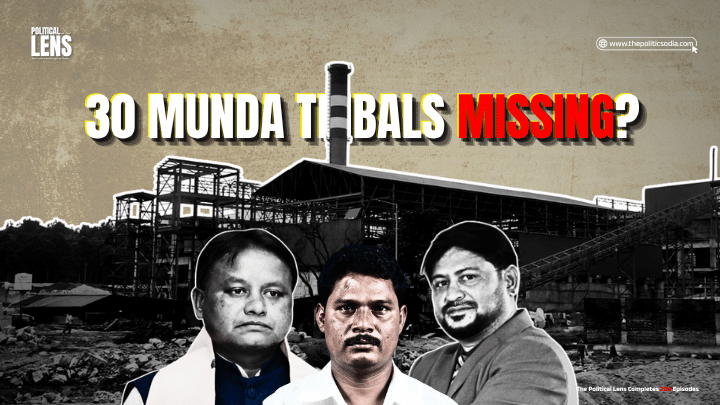 AnalysisSeptember 17, 2026Dilu’s Game, Mohan’s Trouble? 30 Munda Tribals Allegedly Missing, 100+ Acres of Tribal Land Under Question, PM Modi Must Take Note : Super Exclusive
 AnalysisSeptember 11, 2026Thank You, Naveen Babu? BJD’s MMDR Protest Raises Questions Over Leadership and Political Strategy
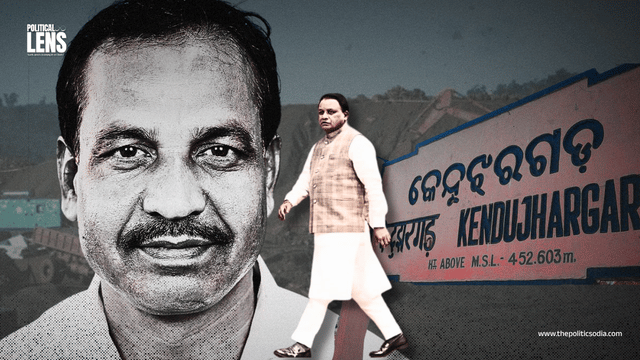 AnalysisSeptember 9, 2026CM in Dubai, Mining Mafia in Keonjhar? Who Is Protecting Odisha’s Mineral Wealth?
 AnalysisSeptember 7, 2026Why Is Mineral-Rich Odisha Still Poor? Radhakanta Sethi Takes on the MMDR Bill in Debate with Sunil Jena