By Sunil Jena
Editor-in-Chief, The Politics Odia
Bhubaneswar: Odisha’s coastline holds significant potential to strengthen India’s maritime trade, industrial connectivity and export-oriented economy. Among the infrastructure assets contributing to this opportunity, Dhamra Port in Bhadrak district has emerged as an important gateway connecting eastern India’s industrial hinterland with domestic and international markets.
Operated by Dhamra Port Company Limited, a wholly owned subsidiary of Adani Ports and Special Economic Zone Ltd. (APSEZ), the port reflects the growing importance of modern maritime infrastructure in supporting Odisha’s economic ambitions.
Dhamra Port: A Strategic Gateway on India’s Eastern Coast
Located between Haldia and Paradip, Dhamra Port benefits from its proximity to the mineral-rich regions of Odisha, Jharkhand and neighbouring states. Its deep-draft facilities, cargo-handling infrastructure and multimodal connectivity support the movement of industrial commodities and other goods.
According to APSEZ’s FY2025–26 operational information, the port has an installed cargo-handling capacity of 52 million metric tonnes (MMT) and handled 48.8 MMT of cargo during the financial year. Its infrastructure includes six berths and mechanised cargo-handling systems designed to support efficient port operations.

These capabilities strengthen Dhamra’s role in the logistics network serving eastern India’s industrial economy.
Connecting Odisha’s Industries with Wider Markets
Ports are more than locations where ships load and unload cargo. They form an essential link between producers, manufacturers, transport networks and customers.
Dhamra Port’s rail and road connections help industries transport raw materials and finished products between production centres and maritime markets. Its rail connectivity links the port with the Bhadrak–Ranital corridor and the broader Howrah–Chennai railway route.
Such connections are particularly relevant for mineral-based industries, steel manufacturing, power generation and other sectors that depend on the reliable movement of bulk commodities.
Efficient logistics can help reduce cargo-handling delays, improve supply-chain planning and strengthen the competitiveness of businesses operating in Odisha and neighbouring states.
Karan Adani and the Infrastructure-Led Growth Vision
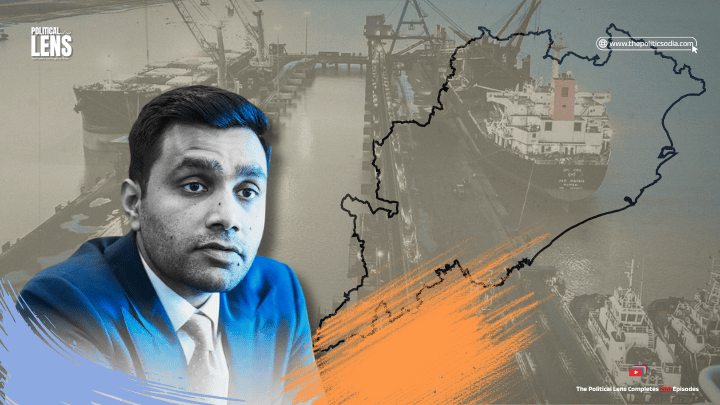
Under the leadership of Karan Adani, Managing Director of APSEZ, the company has continued to develop its integrated ports and logistics network.
The broader business model combines maritime facilities with transport connectivity and cargo-handling capabilities. This approach highlights how infrastructure investments can support industrial activity beyond the immediate boundaries of a port.
For Odisha, the development of maritime infrastructure presents an opportunity to attract complementary industries, encourage logistics services and strengthen links between local production centres and national supply chains.
The long-term significance of this model will depend on operational performance, continued investment, regulatory compliance and the ability to create wider economic benefits for the state.
Creating Opportunities for Odisha’s Workforce
Port-led development can support employment across several sectors, including cargo handling, engineering, equipment maintenance, transport, warehousing, security and logistics management.
It can also create business opportunities for local contractors, small enterprises, suppliers and service providers.
For the benefits to reach Odisha’s communities more widely, investment in workforce development will be important. Industry-linked training, technical education and skill-development programmes can help local young people prepare for jobs associated with ports, industrial facilities and modern logistics operations.
Greater participation by local businesses could also help strengthen the economic relationship between large infrastructure projects and the surrounding region.
However, the scale of employment generated should be assessed through verified project-level data rather than assumed from investment figures alone.
Sustainability and the Future of Port Operations
The future of maritime infrastructure will increasingly depend on efficient energy use, responsible environmental management and the reduction of operational emissions.
In September 2026, Business Standard reported that Dhamra Port had transitioned to renewable electricity for its operations, effective August 2026, as part of APSEZ’s longer-term decarbonisation strategy.
This development, if sustained through transparent reporting and effective implementation, could represent a meaningful step towards reducing emissions associated with energy-intensive port activities.
Sustainable port development must also consider coastal ecosystems, water management, pollution prevention, marine safety and the interests of communities living near industrial facilities.
Responsible environmental practices are essential to ensuring that economic growth and the protection of Odisha’s natural resources remain complementary objectives.
Dhamra’s Role in Odisha’s Economic Future
Odisha’s maritime economy has the potential to support industrial expansion, trade diversification and stronger regional connectivity. Dhamra Port is one part of this larger opportunity, alongside other ports, transport corridors and industrial clusters across the state.
The next stage of development will depend on improving connectivity, expanding value-added industrial activity, strengthening local supply chains and ensuring that infrastructure operates efficiently.
For policymakers and businesses, the priority should be to translate infrastructure capacity into measurable economic outcomes: competitive logistics, sustainable operations, skilled employment and opportunities for Odisha-based enterprises.
Dhamra Port’s strategic location and cargo-handling capabilities provide an important foundation. Its lasting contribution will ultimately be measured by how effectively it supports Odisha’s wider economic development.
Sunil Jena’s Observation
Dhamra Port demonstrates the strategic importance of maritime infrastructure in Odisha’s development journey. Its location, industrial connectivity and expanding operational capabilities offer opportunities to strengthen trade and logistics across eastern India. The key challenge is to ensure that port-led growth delivers tangible benefits through local employment, stronger supply chains, environmental responsibility and transparent implementation.
The Politics Odia | Odisha Politics, Business & Development
Author Profile

- Sunil Jena is the Editor of The Politics Odia, an independent digital platform that delivers fearless political analysis, ground reports, and investigative stories from Odisha. Known for bold storytelling and grassroots connections, Sunil is shaping a new era of regional journalism.
Latest entries
 AnalysisOctober 24, 2026Karan Adani’s Vision: How Dhamra Port Is Strengthening Odisha’s Maritime Economy
 Business PoliticsOctober 24, 2026Odisha Eyes ₹54,000 Crore in Investment Proposals; 20,000 Jobs in Focus After CM’s Mumbai Visit
 Business PoliticsOctober 23, 2026Karan Adani and Odisha: Building a New Chapter of Industrial Growth
 AnalysisOctober 22, 2026Naveen Patnaik Backs Cockroach Janata Party Leaders; BJP-BJD Clash Intensifies in Odisha