By Sunil Jena
Editor-in-Chief, The Politics Odia
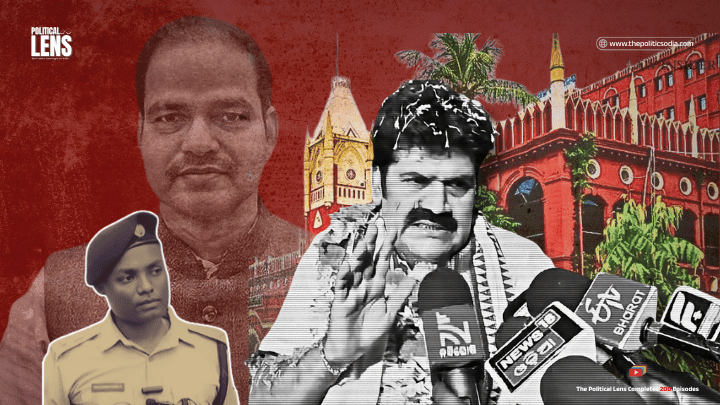
Bhubaneswar : Former MLA Bikram Panda has walked out of jail after nearly 10 months in connection with the high-profile murder of lawyer Pitabas Panda. His release on conditional bail has brought the case back into the political and legal spotlight, with questions now being raised over the manner in which he was arrested and the evidence presented by the police.
Bikram Panda was arrested after Pitabas Panda was shot dead in October 2025. During the investigation, police had described Bikram as one of the key conspirators in the case. He remained in custody for around 10 months before the High Court granted him conditional bail.
After coming out of jail, Bikram alleged that he had been caught in a political conspiracy. He claimed that he had spent 10 months behind bars without justification and described the period as punishment despite his claim of innocence.
Those are, however, allegations made by Bikram and his family. The murder case itself has not ended with the grant of bail, and the allegations against him will ultimately have to be tested during the judicial process.

The High Court’s observations have nevertheless created a separate issue concerning the police procedure followed during his arrest.
During the bail hearing, questions were raised over whether Bikram had been properly informed of the grounds for his arrest. The court referred to the constitutional protection under Article 22(1), as well as the Supreme Court’s guidelines concerning arrest procedures.
The court expressed displeasure over the manner in which the arrest was handled and directed senior officials, including the Home Department’s Additional Chief Secretary and the Director General of Police, to ensure that the relevant arrest guidelines are properly communicated to police stations and authorised officers across the state.
This has raised an important question: if the arrest procedure itself was found wanting, what does it say about the investigation that followed?
At the time of his arrest, the police had projected the case as a major breakthrough and had identified Bikram as a key conspirator. Months later, the High Court’s observations on the arrest procedure have inevitably put the police under greater scrutiny.
That does not, by itself, establish that Bikram was falsely implicated. Nor does the bail order amount to an acquittal. A bail decision and a final verdict are legally different matters.
But the circumstances have created a credibility question that the investigating agency will have to address.
Bikram has also been barred from threatening or influencing witnesses or the family of the victim. Any violation of the conditions could lead to cancellation of his bail.
His father, Kishore Panda, welcomed the court’s decision and repeated the allegation that his son had been framed as part of a conspiracy. He said the family was relieved after Bikram’s release and expressed faith in the judiciary.
The political dimension of the case makes the developments more significant. Bikram Panda’s release comes at a time when questions are already being raised about the police investigation and the evidence on which the original allegations were based.
The central question now is not simply why Bikram spent 10 months in jail. It is whether the investigating agency can clearly establish the chain of evidence connecting every accused person to the murder.
If the police have strong evidence, the ongoing trial will provide the appropriate forum to establish it. If there were shortcomings in the investigation, those too will eventually come under judicial scrutiny.
For now, the High Court’s observations have shifted attention from the arrest itself to the larger question of due process.
The Pitabas Panda murder case remains before the law, and the final determination of guilt or innocence is yet to be made. But Bikram Panda’s release has certainly reopened a political question that had appeared settled after his arrest: was the police investigation strong enough to justify the claims made at the beginning of the case?
Sunil Jena’s Observation:
Bikram Panda’s bail does not end the murder case, but it does put the investigation under renewed scrutiny. The court’s concerns over arrest procedure make due process as important as the allegations themselves. The coming stages of the trial will be crucial in establishing what happened and whether the evidence supports the prosecution’s case.
Author Profile

- Sunil Jena is the Editor of The Politics Odia, an independent digital platform that delivers fearless political analysis, ground reports, and investigative stories from Odisha. Known for bold storytelling and grassroots connections, Sunil is shaping a new era of regional journalism.
Latest entries
 AnalysisSeptember 22, 2026Opposition Parties Hold Rally in Rayagada Seeking Repeal of MMDR Amendment Act 2026
 AnalysisSeptember 22, 2026Odisha Assembly Adjourned Till 1:10 PM Amid Opposition Uproar on First Day of Monsoon Session
 AnalysisSeptember 21, 2026BJP MPs, MLAs Flag Delays in Development Projects; Letters Trigger Fresh Political Row in Odisha
 AnalysisSeptember 11, 2026Thank You, Naveen Babu? BJD’s MMDR Protest Raises Questions Over Leadership and Political Strategy