By Sunil Jena, Editor-in-Chief
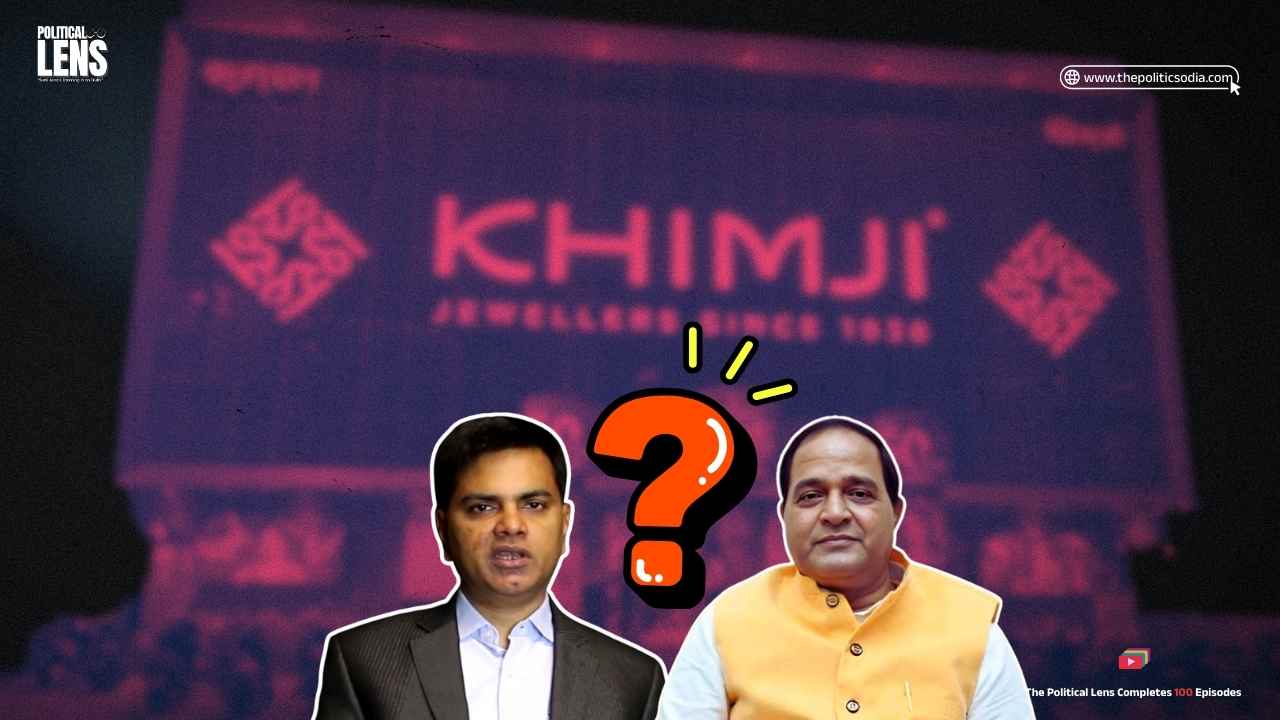
Bhubaneswar: The questions around Odisha’s gold jewellery trade refuse to go away. They have only grown sharper. At the centre of these questions stands Khimji Jewellers, one of the most visible and fastest-expanding jewellery chains in the state.
This is not the first time the gold business in Bhubaneswar has come under scrutiny. During the previous BJD government, the Civil Supplies and Legal Metrology departments conducted inspections at several jewellery shops, including Khimji Jewellers. Soon after, the Food Supplies and Consumer Welfare Minister Ranendra Pratap Swain told the media that gold traders in Bhubaneswar were cheating customers in terms of weight and purity.
The statement was blunt. It came from the government itself. But what followed was silence.
Raids That Led Nowhere

Despite inspections and a public admission by a cabinet minister, there was no clear outcome. No detailed report was placed in the public domain. No major penalty was announced. No licence was cancelled. The matter quietly disappeared. The question many asked then, and continue to ask now, is simple. If cheating was happening, why was no one held accountable?
New Government, Old Pattern
Odisha now has a BJP government, but the approach appears unchanged. There has been no statewide enforcement drive, no special audit of large jewellery chains, and no public review of gold trade compliance. For a sector involving huge public money and household savings, the regulatory response remains strikingly weak. Two governments. Same silence.
Khimji Jewellers and the Power of Visibility
What sets Khimji Jewellers apart is not just business growth, but advertising power. Across Odisha, the brand dominates newspapers with full-page ads, prime-time television slots, digital platforms with constant promotions, and giant hoardings at prime road junctions. Industry insiders say such campaigns cost crores of rupees every year. This raises a basic question that regulators have not answered. How does a traditional gold business sustain such massive spending year after year?
Who Is Paying for the Ads?
In the jewellery trade, official margins are often described as limited. Yet advertising expenses do not disappear. Consumer groups argue that these costs are usually passed on to buyers, quietly and indirectly. This can happen through high and confusing charges, lower value during buyback or exchange, and pricing structures that ordinary customers cannot verify. The customer believes they are paying for gold. In reality, they may also be paying for branding.
Fast Expansion, Little Scrutiny
Over the last few years, Khimji Jewellers has expanded rapidly, opening more than ten showrooms across Odisha, occupying premium locations, and holding large gold inventories. Gold jewellery is not a tech startup. It is a heavily regulated, cash-sensitive trade. Yet there is no public record of any special financial audit, compliance review, or enforcement action linked to this rapid growth. Expansion itself is not illegal. But expansion without visible oversight is dangerous.
Laws Exist. Action Does Not.
India already has strong laws to regulate gold. Mandatory BIS Hallmarking, Legal Metrology Act for weight accuracy, GST laws for billing and tax compliance, and the Consumer Protection Act, 2019, are all in place. On paper, the system is tight. On the ground, enforcement appears optional. The result is predictable: big players grow stronger, while consumers are left to trust advertisements instead of regulators.
Latest Government Action
The government has recently provided an official update on enforcement. Consumer Welfare Minister Krushna Chandra Patra told the Odisha Assembly that 116 gold traders were found indulging in malpractice to deceive customers in the last five months. According to the Minister, 3,125 raids were conducted during this period, and a fine amounting to Rs 3.13 lakh was collected from those deceiving customers. Cases have also been registered against these traders for violating the Legal Metrology Act, 2009 and Orissa Legal Metrology (Enforcement) Rules, 2011.
The Food Supplies Department Cannot Look Away
Gold trade regulation in Odisha falls squarely under the Food Supplies and Consumer Welfare Department. That makes Krushna Chandra Patra, the current minister, politically responsible. It makes Sanjay Kumar Singh, IAS, the Principal Secretary, administratively responsible. Their silence now carries weight.
Questions That Demand Answers
Why has the department not ordered regular surprise inspections of large jewellery chains? Why are Legal Metrology reports not made public? Why do consumer complaints rarely result in visible action? Why has no comprehensive audit been announced despite past admissions of malpractice? These are not political questions. These are governance questions.
Silence Is a Decision
Gold is not a luxury for most families in Odisha. It is savings, security, and insurance against a crisis. When governments fail to regulate powerful jewellery chains, they are not being neutral. They are choosing silence. And silence, in a sector this sensitive, benefits only one side.
This report does not declare guilt. It demands accountability. Until the state explains what it is doing and why it is not doing more, the rise of Khimji Jewellers will remain inseparable from the larger question facing Odisha: Who is watching the gold trade, and why are they looking away?
Editorial Questions by Sunil Jena, Editor – The Politics Odia
As Odisha’s gold trade grows bigger, the questions remain unanswered. Khimji Jewellers’ rapid expansion and massive advertising spend highlight the regulatory gaps that leave consumers exposed. Here are five questions the state must answer:
Why have regular inspections and audits of large jewellery chains, including Khimji, not been conducted openly?
How are advertising and marketing costs accounted for, and are customers indirectly paying for them?
Why have Legal Metrology and BIS compliance reports remained largely invisible to the public?
What steps are Minister Krushna Chandra Patra and Principal Secretary Sanjay Kumar Singh taking to ensure enforcement is consistent and effective?
When consumer complaints exist, why is visible action so rare, leaving households uncertain about the gold they invest in?
The gold trade is more than business; it is savings, security, and trust. Until these questions are addressed, regulatory silence benefits no one but the powerful.
Author Profile

- Sunil Jena is the Editor of The Politics Odia, an independent digital platform that delivers fearless political analysis, ground reports, and investigative stories from Odisha. Known for bold storytelling and grassroots connections, Sunil is shaping a new era of regional journalism.
Latest entries
 AnalysisSeptember 17, 2026Dilu’s Game, Mohan’s Trouble? 30 Munda Tribals Allegedly Missing, 100+ Acres of Tribal Land Under Question, PM Modi Must Take Note : Super Exclusive
 AnalysisSeptember 11, 2026Thank You, Naveen Babu? BJD’s MMDR Protest Raises Questions Over Leadership and Political Strategy
 AnalysisSeptember 9, 2026CM in Dubai, Mining Mafia in Keonjhar? Who Is Protecting Odisha’s Mineral Wealth?
 AnalysisSeptember 7, 2026Why Is Mineral-Rich Odisha Still Poor? Radhakanta Sethi Takes on the MMDR Bill in Debate with Sunil Jena