By Sunil Jena, Editor-in-Chief
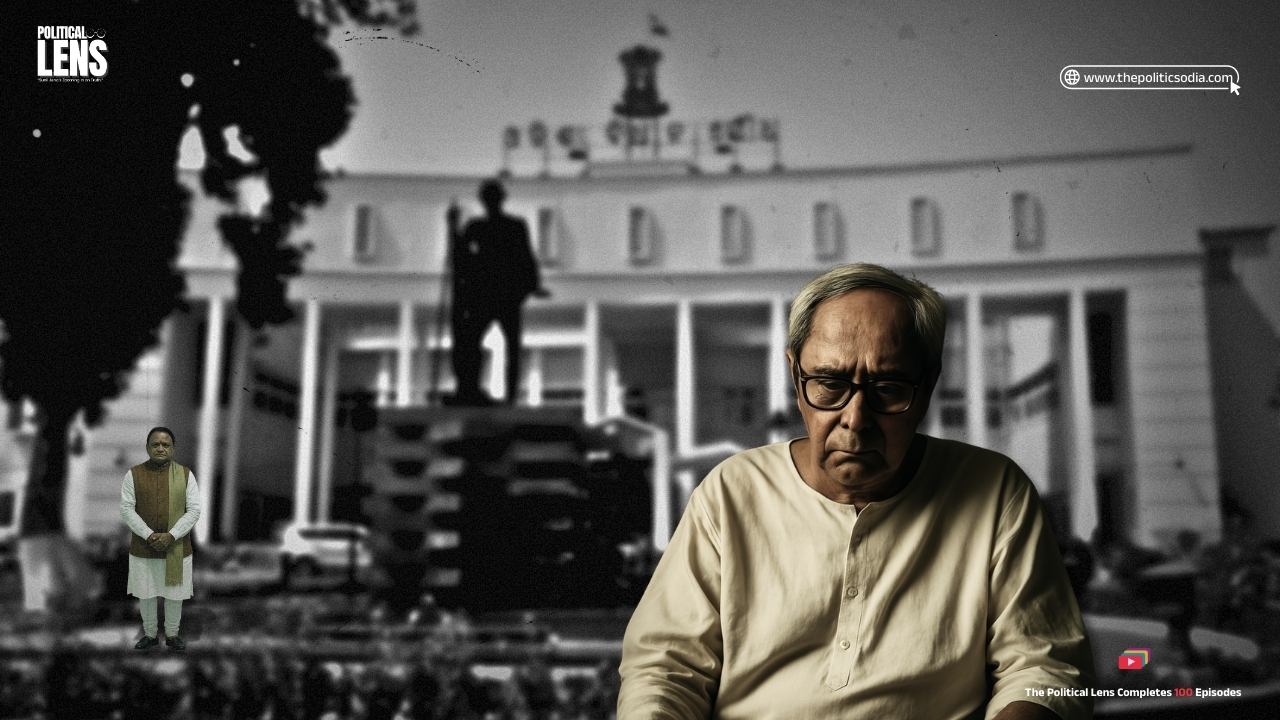
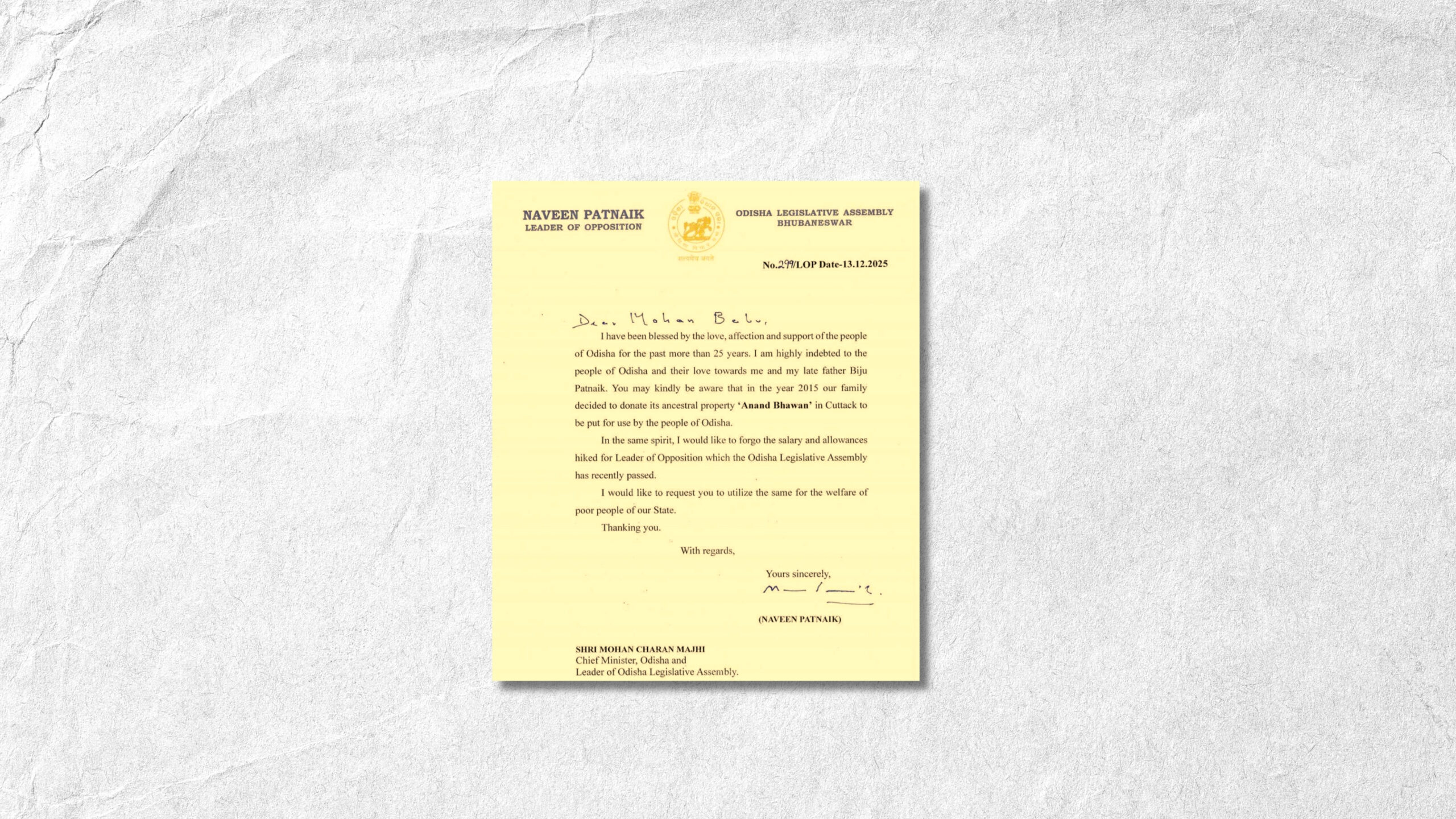
Bhubaneswar: The recent hike in salaries and allowances of Odisha legislators and ministers has triggered a major political and public debate across the state. While the Odisha Assembly passed three separate bills related to salary, allowance and pension enhancement, a strong political signal came from Leader of Opposition Naveen Patnaik, who announced that he would not accept the increased salary and would instead donate the amount for the welfare of the poor.
In a letter addressed to Chief Minister Mohan Charan Majhi, Naveen Patnaik stated that he has received uninterrupted support and blessings from the people of Odisha for over 25 years and considers himself indebted to them. He recalled that legendary leader Biju Patnaik had also enjoyed the unwavering support of the people. Naveen further mentioned that his family had already dedicated their ancestral home, Anand Bhawan in Cuttack, to the people of Odisha in 2015. Continuing in the same spirit, he declared that the enhanced salary would be donated for the benefit of poor and underprivileged citizens.
This announcement has raised a crucial political question in the state: while Naveen Patnaik has chosen not to accept the salary hike, will Chief Minister Mohan Majhi do the same? The issue has also put pressure on legislators from BJD, BJP and Congress, as public anger over the salary hike continues to grow.
Salary Hike Sparks Political Debate in Odisha as Naveen Patnaik Refuses Increased Pay

It is worth noting that the long-standing demand of MLAs was fulfilled during the recently concluded Winter Session of the Assembly. Salaries and allowances were increased by more than two-and-a-half times. Pension for former MLAs was also enhanced. Three separate amendment bills related to MLAs, ministers, the Speaker, and the Deputy Speaker were passed unanimously, and the revised salaries will take effect from June 2024.
Under the revised structure, MLAs’ basic salary has increased from ₹35,000 per month to ₹90,000. Including allowances, an MLA will now receive approximately ₹3.45 lakh per month. The allowances include constituency allowance, transport allowance, electricity bills, medical allowance, personal travel allowance, telephone allowance and other benefits.
The Chief Minister’s basic salary has increased from ₹41,000 to ₹1 lakh per month. With allowances, the total monthly remuneration comes to around ₹3.74 lakh. Cabinet Ministers and Ministers of State will receive nearly ₹3.6 lakh per month, while the Speaker and Deputy Speaker will also receive similar amounts, including allowances.
Former MLAs’ pension has been revised from ₹30,000 to ₹80,000 per month, with additional pension benefits for those who served beyond five years. For the first time, former MLAs will also receive a monthly travel allowance.
Another significant change introduced through these bills is that salaries will now be revised automatically every five years through a government notification, without requiring a fresh bill in the Assembly. The last revision was done in 2017.
While the government argues that the revision was overdue and in line with the salaries of legislators in other states and the Parliament, the timing of the hike has become politically sensitive. Naveen Patnaik’s decision to donate the enhanced salary has added a moral dimension to the debate and intensified public scrutiny of the ruling dispensation.
As public reactions continue across Odisha, the larger question remains: will the salary hike translate into greater accountability, better public service and cleaner politics, or will it deepen public resentment? The coming days will reveal how political parties and elected representatives respond to this growing pressure.
Author Profile

- Sunil Jena is the Editor of The Politics Odia, an independent digital platform that delivers fearless political analysis, ground reports, and investigative stories from Odisha. Known for bold storytelling and grassroots connections, Sunil is shaping a new era of regional journalism.
Latest entries
 AnalysisSeptember 17, 2026Dilu’s Game, Mohan’s Trouble? 30 Munda Tribals Allegedly Missing, 100+ Acres of Tribal Land Under Question, PM Modi Must Take Note : Super Exclusive
 AnalysisSeptember 11, 2026Thank You, Naveen Babu? BJD’s MMDR Protest Raises Questions Over Leadership and Political Strategy
 AnalysisSeptember 9, 2026CM in Dubai, Mining Mafia in Keonjhar? Who Is Protecting Odisha’s Mineral Wealth?
 AnalysisSeptember 7, 2026Why Is Mineral-Rich Odisha Still Poor? Radhakanta Sethi Takes on the MMDR Bill in Debate with Sunil Jena