Sunil Jena
Editor in Chief
The Politics Odia
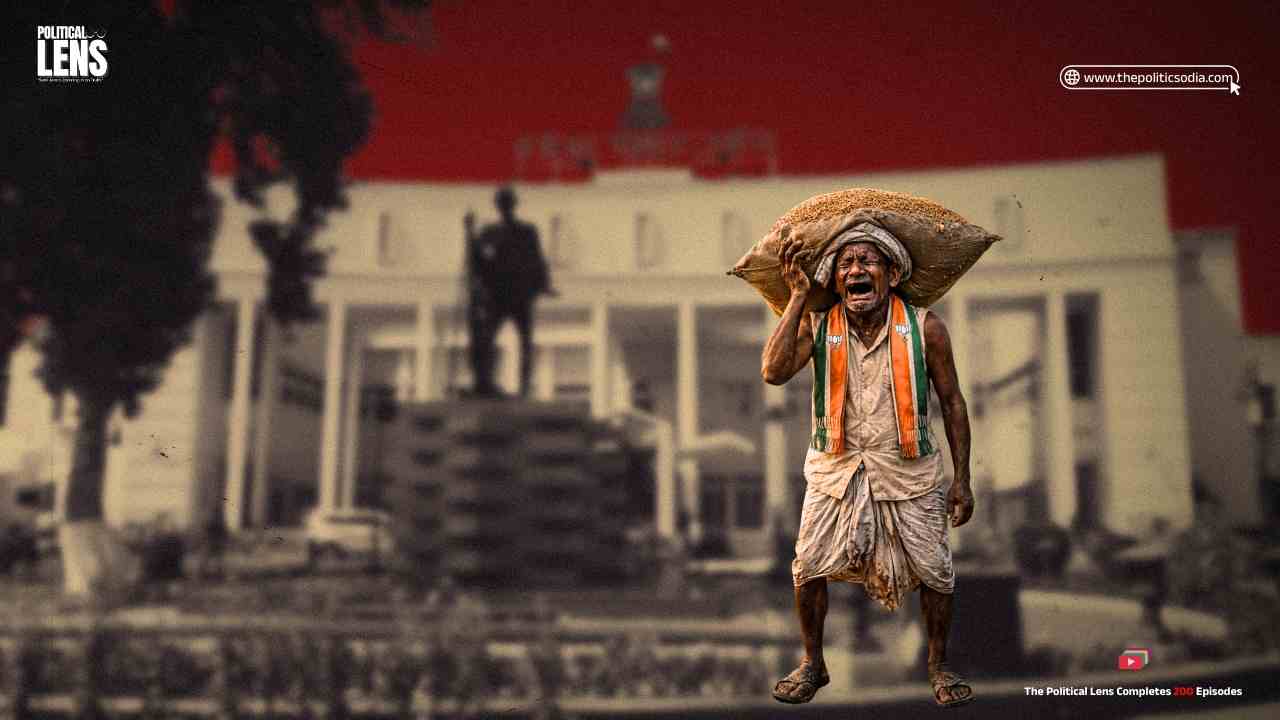
Bhubaneswar: The Odisha Assembly rarely sees visuals as striking as legislators walking in with paddy sacks on their heads. But that is exactly what happened as the opposition turned the farmer issue into the central political theme of the session.
From the moment the House assembled, the atmosphere was tense. Slogans, banners and repeated adjournments meant that the Assembly could function for only a few minutes through the day. The paddy placed on the reporter’s table became a symbol of a larger problem that has been building for months.
Across the state, farmers have been struggling with delays in procurement. In some places, mandis opened late. In others, tokens were either delayed or issued in limited numbers. There are also complaints about millers not lifting paddy on time.
These issues are not new, but this year they appear to have converged at the same time.

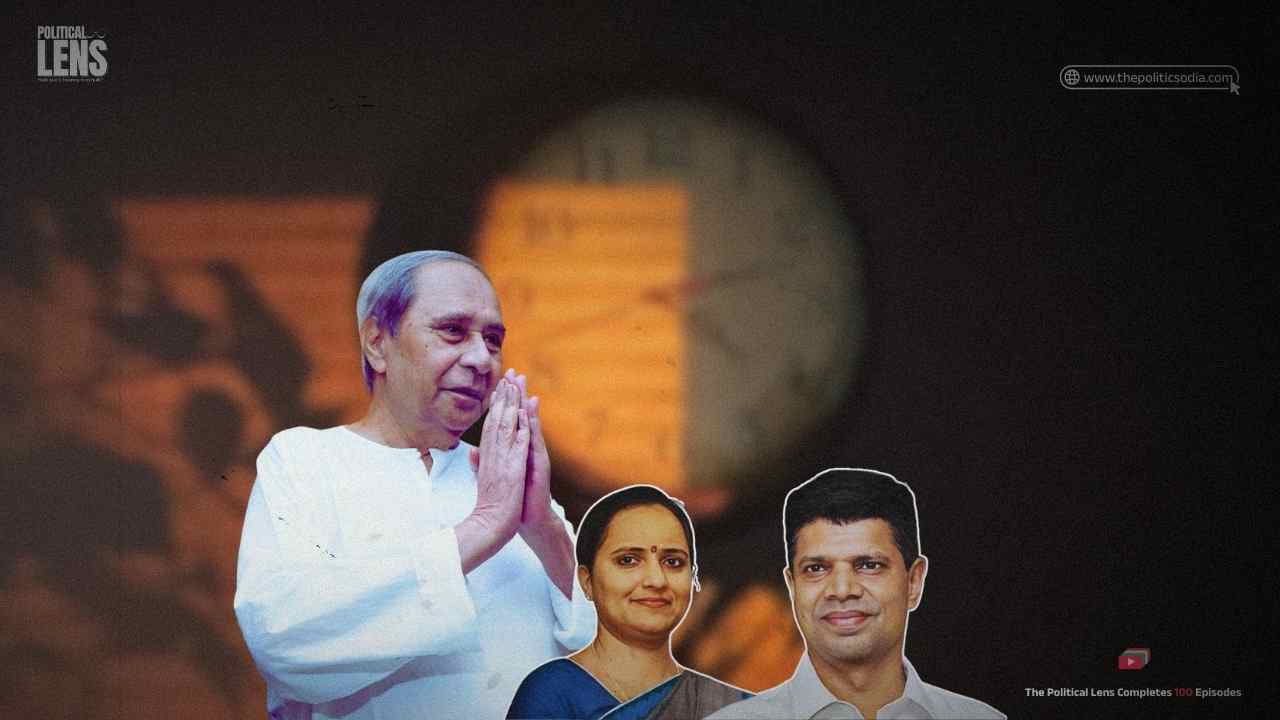
The opposition, led by Naveen Patnaik, used the moment to corner the government both inside and outside the House. The strategy was clear. When the House does not run, the issue automatically gets more attention.
The government, on the other hand, insists that procurement is progressing and that steps are being taken to streamline the process.
The subsidy calculation added another layer to the debate.
According to the figures placed in the House by Krushna Chandra Patra, the effective state support works out to 731 rupees instead of the 800 rupees that had been mentioned in political communication earlier. This difference of 69 rupees per quintal may appear small on paper, but for farmers selling large quantities, it becomes significant.
The opposition quickly turned this into a credibility question, arguing that the promise and the payment do not match. The government explains that procurement involves multiple components and that the final amount cannot be read in isolation.
For farmers waiting in mandis, however, the debate is not about calculations. It is about when their paddy will be lifted and how much they will finally receive.
That is why protests are no longer confined to the Assembly. District-level demonstrations have been taking place for weeks. Farmer organisations have been raising the same set of demands: timely procurement, clear token distribution and removal of miller-related bottlenecks.
Politically, the issue has given the opposition a strong rallying point. For a government that is still in its early years, perception matters as much as policy. When visuals of disruption dominate the news, they create an impression of loss of control, even if the administrative process is continuing in the background.
At the same time, Assembly disruptions are a common parliamentary tactic. They are meant to force discussion and extract a response. Whether they translate into long-term political damage depends on how quickly the government resolves the core issue.
For the Mohan Majhi administration, the immediate challenge is operational. Paddy must be lifted, payments must be credited, and communication with farmers must improve.
For the opposition, the objective is to keep the spotlight on the issue until those steps are visible on the ground.
Between these two positions stand thousands of farmers who are waiting for their turn in the mandi.
In the end, the political noise will fade. What will remain is the procurement record of this season. That will decide who controls the narrative in the months ahead.