Sunil Jena
Editor in Chief, The Politics Odia
Bhubaneswar: When Mohan Charan Majhi took oath as the Chief Minister of Odisha on June 12, 2024, it marked a historic moment. For the first time, the state saw a BJP government with a new leadership face. Expectations were high, both within the party and among voters who had chosen change after a long political era.
Nearly a year later, the political conversation has shifted from expectations to evaluation.
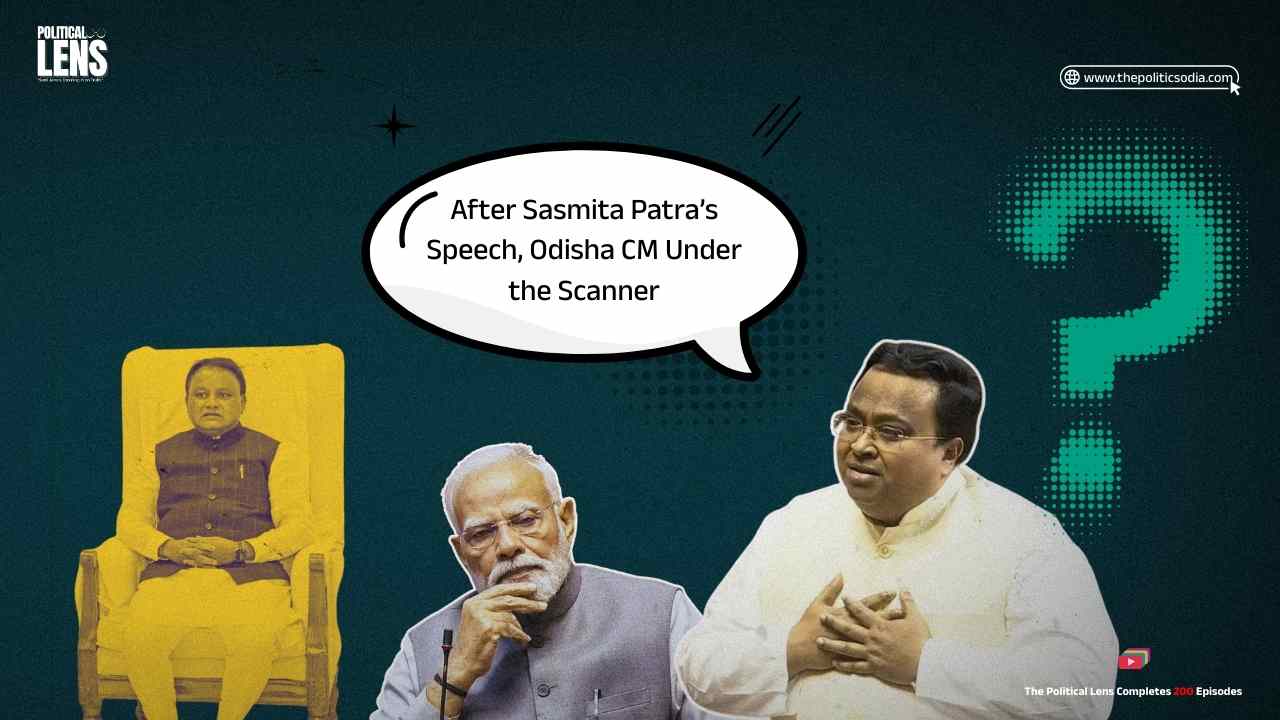
The discussion gained momentum after BJD MP Sasmit Patra raised a detailed note in Parliament, outlining concerns about governance, administration, and direction in Odisha since the new government took charge. The speech, delivered in Odia, drew attention not only because of its content, but because of its timing.
Political circles in Delhi and Bhubaneswar began to read the signals carefully.

The speculation doing the rounds suggests that the central leadership, including the office of Prime Minister Narendra Modi, is closely watching the performance of the Odisha government, with June 12 emerging as an informal review point. Whether this is routine political monitoring or something more serious is a matter of interpretation.
What is undeniable is that governance outcomes are now under sharper focus.
Supporters of the government argue that Mohan Majhi was chosen to represent a new social and regional balance, and that any administration needs time to stabilise. They point to structural changes, welfare delivery, and efforts to align the state with central schemes.
Critics, however, say that the administration has lacked direction and urgency. They argue that Odisha’s development momentum has slowed, coordination within departments remains uneven, and public dissatisfaction is growing. According to this view, the BJP came to power on the strength of Prime Minister Modi’s appeal, not because voters demanded a specific chief ministerial face.
This distinction matters in political strategy.
Within BJP corridors, quiet discussions are reportedly underway about whether a leadership reset could help contain public anger before it deepens. Such conversations are not unusual in Indian politics, especially when a new government is still finding its footing.
At the same time, no official statement has been made suggesting any immediate change. Leadership decisions at this level are rarely abrupt. They usually follow internal assessments, electoral calculations, and ground feedback.
The comparison with the previous government under Naveen Patnaik also continues to influence public debate. While voters opted for change, they did not necessarily opt for instability. Expectations were for better governance, faster decision-making, and visible development.
Whether Mohan Majhi can meet those expectations in the coming months will largely decide the political narrative.
For now, the question being asked is not about removal, but about performance. June 12 has become symbolic, not because of any announcement, but because it marks one year of governance.
In politics, anniversaries are moments of judgment.
Odisha’s story is still unfolding. The answers will come not from rumours or speeches alone, but from what people experience on the ground. Roads, jobs, services, and confidence in administration will ultimately shape the verdict.
Until then, the debate continues.