Sunil Jena
Editor in Chief
The Politics Odia
Bhubaneswar: The political temperature in Odisha has risen once again, and at the centre of the latest confrontation is the farmer.
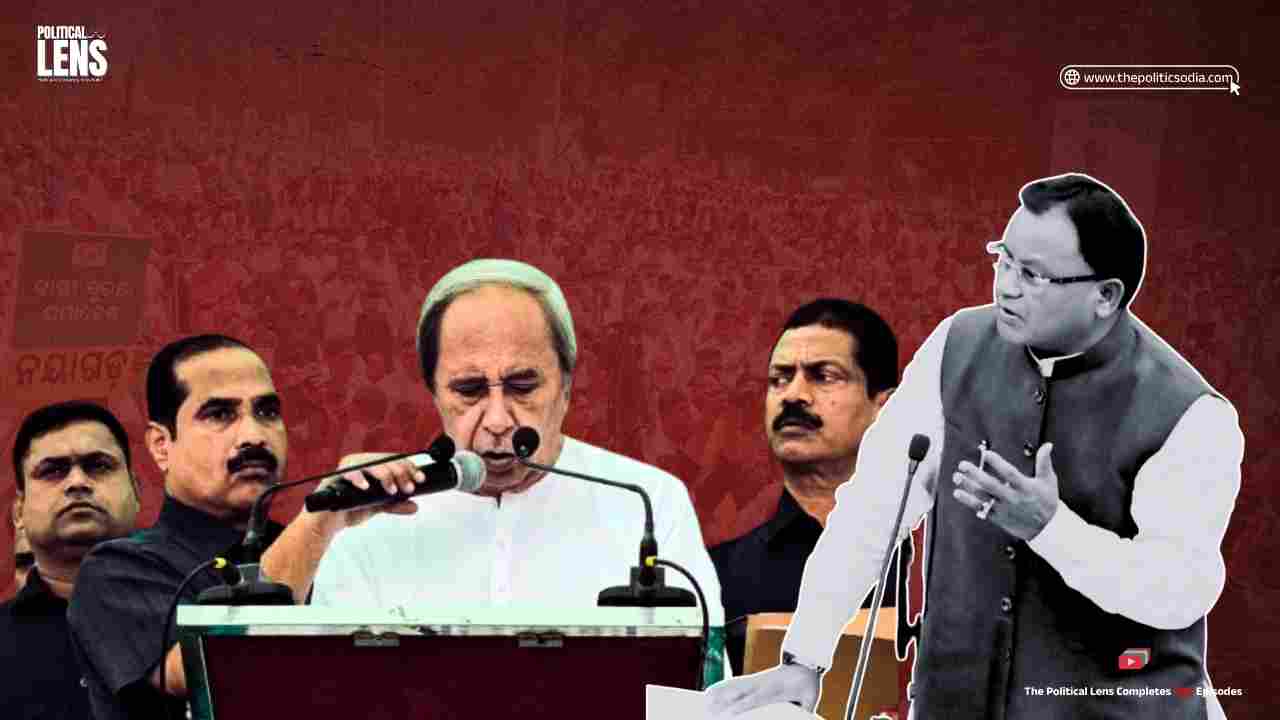
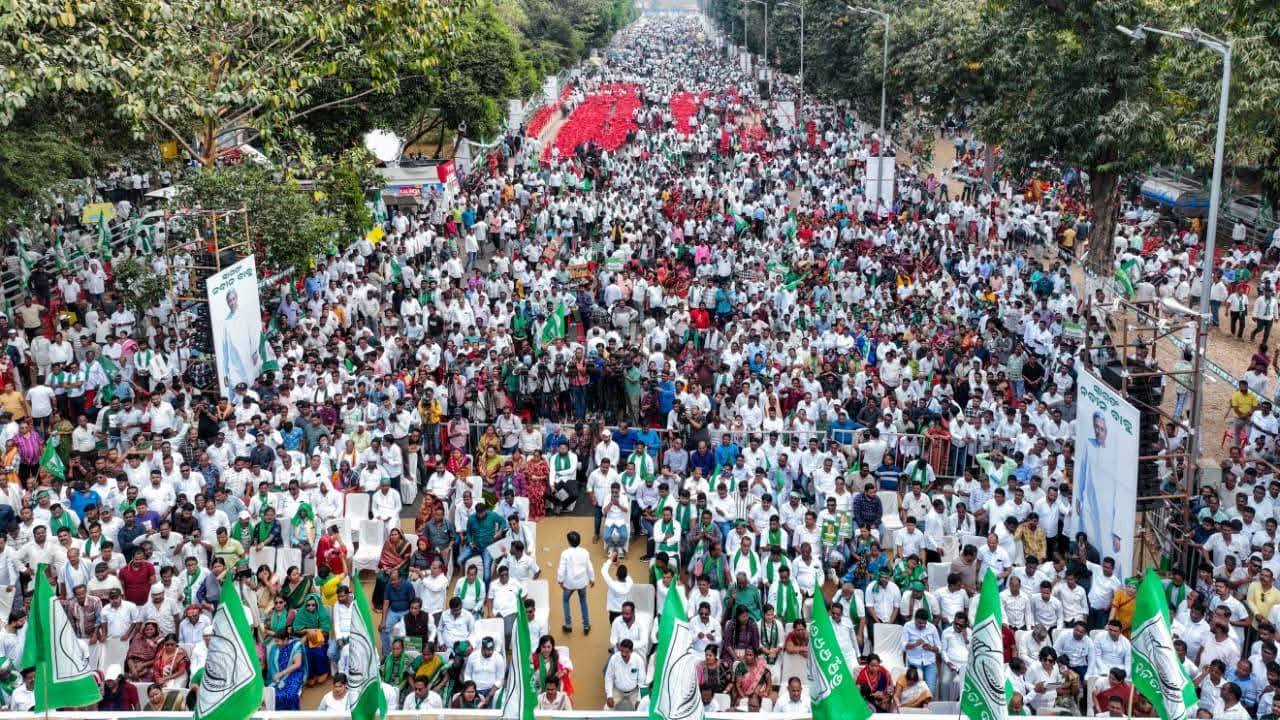
At a large farmers’ gathering, Leader of Opposition Naveen Patnaik launched a direct attack on the state government, questioning its delivery on procurement, fertiliser availability and implementation of election promises. His speech was structured around a familiar political line – that the previous administration had created a support system through irrigation, budgetary provisions and the KALIA scheme, while the present government was relying more on announcements than outcomes.
The tone was sharp and the messaging clear. The target audience was not just the crowd at the rally but the wider rural electorate.
The response from Chief Minister Mohan Charan Majhi was equally direct. He accused the opposition of using the farmer issue for political mobilisation and said the protests were more about disruption than representation. According to him, the government’s data shows that procurement is progressing and that farmers are satisfied.

This exchange has now moved beyond a routine political disagreement. It is a contest over credibility.
Agriculture in Odisha is not just an economic sector. It is a political base. Any narrative built around farmers shapes the larger electoral mood.
The opposition is trying to revive its traditional rural connect by focusing on procurement delays, allegations of cut in price through deductions and the demand for time-bound payments through direct benefit transfer. The ruling side is attempting to project continuity in procurement and a more transparent system.
Both positions are rooted in political strategy.
For Naveen Patnaik, the farmer issue provides a strong ground to re-enter active political debate after a period of relative silence. The language of his speech suggests that the opposition wants to turn agriculture into the central theme of the coming political cycle.
For Mohan Majhi, the challenge is administrative as well as political. If procurement runs smoothly and payments reach farmers on time, the government’s argument gains strength. If there are visible delays, the opposition’s campaign will find wider acceptance.
The argument about whether farmers were present in the protest or not is part of a larger optics battle. Numbers in rallies are used by both sides to claim legitimacy.
But the real test is not in the rally ground or the Assembly.
It lies in mandis, fertiliser outlets and bank accounts where payments are credited.
Farmers measure policy not by speeches but by timelines.
The debate has also reopened the comparison between the two governance models. One is based on direct income support and long-term irrigation expansion, and the other on procurement reform and alignment with central programmes.
This comparison will continue to dominate Odisha’s political discourse.
At the moment, both sides are speaking with confidence. The opposition believes the rural mood is turning. The government believes the silent majority supports its work.
The truth will emerge during the next procurement cycle.
Because in Odisha, the road to political power still passes through the farmer’s field.