By Sunil Jena
Editor-in-Chief, The Politics Odia
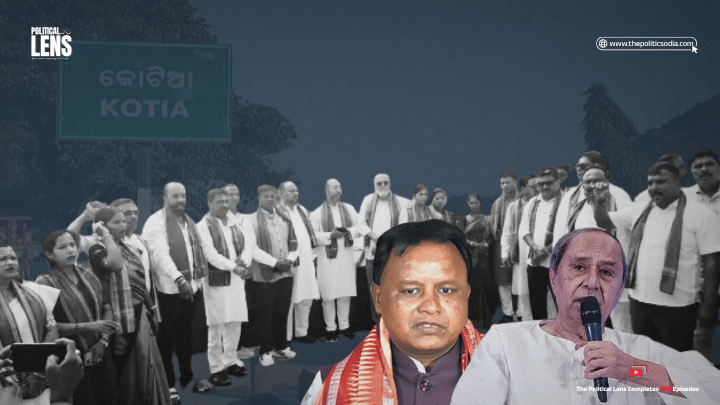
Bhubaneswar : Odisha Chief Minister Mohan Charan Majhi has responded to Leader of Opposition Naveen Patnaik’s October 19 letter on the long-standing inter-state boundary dispute over the Kotia group of villages in Koraput district, reiterating that the area is an integral part of Odisha and calling for a constructive, legally acceptable resolution.
In his reply dated October 27, Majhi stated that Kotia has remained an inseparable part of Odisha since the formation of the separate province in 1936. He said the state government was committed to protecting Odisha’s geographical integrity and legal interests.
Majhi also urged that the sensitive issue should not be viewed primarily through a political lens. Instead, he called for a solution based on legal principles, constructive engagement and respect for judicial processes. He sought constructive suggestions from Patnaik on resolving the long-running dispute.
Government Committee Focuses on Kotia’s Development
In the letter, the Chief Minister referred to a committee formed under the chairmanship of the Revenue and Disaster Management Minister to oversee the integrated development of Kotia and surrounding areas.

According to Majhi, ministers and senior officials have been visiting the region to assess local needs and review development requirements. He said all stakeholders should exercise restraint and responsibility while respecting the judicial process in seeking a resolution.
The government’s stated position combines its claim over the territory with an emphasis on improving facilities and development in the border region.
Revenue Minister Holds Meeting Over Andhra Pradesh’s Activities
Separately, Revenue Minister Suresh Pujari convened a departmental-level meeting to discuss the issue of elections conducted by Andhra Pradesh in Kotia, according to the information provided.
Pujari joined the meeting through video conference from Sambalpur. Participants included the Koraput Collector and Superintendent of Police, the Southern Revenue Divisional Commissioner, senior officials from the Revenue and Home departments, police officials, the Law Secretary and the Advocate General.
The meeting was intended to discuss the state’s response to Andhra Pradesh’s latest moves in the disputed area. Pujari said instructions had already been issued to prepare a counter-plan.
The developments underline the administrative and political sensitivity surrounding Kotia, where competing claims and electoral activity have remained points of contention between the neighbouring states.
Suresh Pujari Questions Previous Government’s Record
Following the meeting, Pujari criticised Patnaik’s letter and challenged the previous Biju Janata Dal government to explain what it had done for Kotia during its 25 years in power. He also called for an open debate on the issue.
The exchange has brought the Kotia dispute back into the political spotlight, with the current government emphasising legal measures and administrative preparedness, while questioning the record of the previous government.
The long-standing dispute remains a matter requiring careful handling, with legal processes, inter-state coordination and the welfare of residents all central to any lasting resolution.
Sunil Jena’s Observation
Kotia requires a response that combines legal clarity, sustained administration and visible development for residents. Political debate may bring attention to the issue, but a durable resolution will depend on consistent action, respect for judicial processes and coordination between the states.
Author Profile

- Sunil Jena is the Editor of The Politics Odia, an independent digital platform that delivers fearless political analysis, ground reports, and investigative stories from Odisha. Known for bold storytelling and grassroots connections, Sunil is shaping a new era of regional journalism.
Latest entries
 AnalysisOctober 28, 2026Sujata Rout Karthikeyan’s Emerging Role in BJD as Naveen Patnaik Targets BJP
 AnalysisOctober 27, 2026Kotia Dispute: Mohan Majhi Replies to Naveen Patnaik, Calls for Legal Solution Over Political Debate
 AnalysisOctober 26, 2026Karan Adani’s Odisha Connect: How Data Infrastructure Could Shape Odisha’s Digital Future
 AnalysisOctober 26, 2026PM Modi Inaugurates ₹169-Crore RBI Data Centre in Odisha; ‘Mines to Microchips’ Vision for State